Tag: writing

  • 10. The slow burn of a river

    little by little, you carry away what no longer belongs to you—sand, silt, dirt – and then somewhere far downstream, you look around and realize you’ve become something undeniable. Not through a single plunge or a sudden flood, but through a long, patient insistence on being exactly what you are.

    We all believe that we have all this time left, that the future seems worlds away. But in the blink of an eye, time has passed by, and I am now in my 3rd year of university. the future that seemed so distant and far away now breathes down my neck, reminding me of its urgency – and I’ve never felt so sure yet so completely and utterly lost at the same time.

    Caught between my aspirations and fears, there are days where I feel suffocated. Wrestling with being present and intentional whilst feeling like I’m aimlessly floating in an endless void that leads nowhere. Caught between having the desire to achieve anything and everything I want but not feeling good enough to do so.

    And let’s not even tap into my own self-image. Because most days, I don’t even understand myself. Currently trying to become my own person while battling the voices from my past, the judgment of others, and the discourse happening in the present. Most days, my body feels like some kind of foreign entity; at times, we coexist peacefully, and at other times, it’s a constant war.

    Without a doubt I can proudly say I’ve come so far in the last few years, but yet I feel nowhere near where I want to be. The human experience is truly so unique and vast, I don’t think any number of words could ever really express what it’s like. But then again, that’s what this article is for me, an attempt at vocalizing and formally expressing those emotions that have flooded me in recent days.

    There is this quote by Van Gogh I really like, which says:

    “Life is a terrible reality and we ourselves are running straight into infinity”

    This life we get to live is ever-changing, beautiful, and tragic; it is impossible to wrap our heads around it all, to understand it all, to find an answer for it all. However, we live in a constant state of exploration, as every day we wake up and choose to pursue new answers, perspectives, and narratives. With each day, I, we, grow wiser and hungrier to find the answers we crave, and it is all in the attempt to build ourselves.

    But the making of ourselves is never an easy task, especially when we’re all brought up so differently. We’re all raised and taught different perspectives and outlooks on life. We all come with a set of beliefs, philosophies, and approaches to life that are given to us by our respective parental figures or just simply the environment we are surrounded by.

    However, for all of us, there comes a point in our lives when we wake up and realize that we, too, want to shape our own perspectives. We, too, want to analyse and process the world in a way that is ours to claim. It is no simple feat, but it is a process that all of us undergo one way or another; no matter the cause, we all set sail on the path towards becoming ourselves.

    Unfortunately, a tough realisation to this is that becoming your own person can be one of the most painful processes we go through in our lifetime. Why? – because the journey has no beginning or end. But I think for most of us, for me defiantly, it awakens when freshly entering into adulthood. Ever since I hit my 20s, 21 now, I can feel it creeping behind me and breathing down my neck (dramatic I know), manifesting itself as questions, arguments, and disagreements. It’s a deadly whisper, a quiet thief that shows up at our doorstep one day and robs us of all certainty.

    adulthood has always been painted as a kind of destination. as kids, we imagined that one day, without warning, the world would hand us a badge that says “grown-up.” we thought it would come with certainty, competence, and an unshakable sense of self. but then it happens, you turn 20 and realize the badge never arrives.

    It is an uncomfortable and weird process to get up one day and have it all hit you that everything you once deemed certain and indisputable is now fleeting and uncertain. It shakes you at your core, unsettles your soul, to go from feeling like you know yourself to looking in the mirror and seeing a stranger staring back at you. Everything you’ve built crumbles before you, and you cannot stop it; you can only hope that it can be rebuilt.

    But how do you build something you’ve never seen before? How do you fix something you never even knew needed fixing?

    Having your dreams, morals, and belief systems confronted can be disconcerting. Accepting that we no longer see things the same way; no longer want the same things we used to is incredibly confusing. Especially when you’re entering the realm of adulthood and everyone is scrutinizing your every move, expecting you to have it all sorted out.

    Which is why some of us enter this state of negation, in which we repeatedly tell ourselves that this is simply “a small crisis.” This is where denial kicks in.

    We resort to our old ways, hoping that with the remaining pieces we can rebuild ourselves again. We cling to our previous beliefs, in search for an answer, in search for some hope. Trying to convince ourselves this is a mere bump in the road, a small detour that’ll take us right back to where we used to be. However, as we try to rebuild, our building crumbles because our foundations are no longer there.

    Our old foundations no longer support us because they no longer represent us; they no longer align with our souls. But alas, we attempt it, not because we trust in the old foundations but because they are familiar and of course, being the beings, we are – familiarity feels safe, as opposed to launching ourselves into the unknown. Though deep down, we know and we acknowledge that this is no longer who we are, yet we hesitate to move forward, we hesitate to ask questions, because there is nothing more terrifying than going in a direction we’ve never been.

    Right here, in the known, in the familiar, this feels comfortable, this feels safe. But it is a fallacy, a facade; it is not who we are, but merely a blueprint that was crafted for us before we even had the capacity to consent. That familiarity is simply artificial, a bunch of make-believe fabricated to convince you that you are the person they taught you to be. And for a long time, it works; you grow up thinking this is who you really are, certain that your thoughts belong to you and that your beliefs are truly rooted within you.

    We’re conditioned not to question or doubt them because how can they be wrong? How could something you’ve always known be wrong? How can something we’ve been taught since the day we were born be wrong?

    It can, and one day, at a time when you least expect it, it all crumbles. The world that was once predigested for you now sits at the pit of your stomach, whole and heavy. Now it is you who has to consume the world and digest it on your own. This process can be uncomfortable, and we might sometimes choose things that unsettle us, but that is just a part of it. As we leave our past circles and enter new environments, we learn and unlearn, and we’re presented with new perspectives, ideas, and beliefs that challenge our current systems.

    As you begin rebuilding, you’re met with a million questions. Flooded with a trillion possible answers, and trying not to drown underneath them. And with everything you’ve ever known collapsing before you, life begins to feel infinite. The world that was once so simple becomes intricate and complex. Nothing is simple anymore; reality is tragic, feelings become profound and immeasurable, and you are but the shell of the person you once were.

    Despite all this, you pick up the pieces, dissecting them one by one. You begin to learn to ask hard questions, to take the good and leave the bad. To tread carefully when making difficult decisions. You begin to experience the world through your own unadulterated lens. You start shaping your own views and become the author of your own opinions.

    Truth be told, half of the time you will be unsure, most days the world and its persuasiveness might get to you. You will have to wrestle through it all, be open to other points of view without compromising your own and let others confront your opinions without yielding all control. Your dreams will be scrutinized, how you dress will be scrutinized, the movies you watch, the books you read, and the music you listen to. It will all be dissected and labelled, but through it all, you must not let it determine who you are.

    Identity is just the sum of the choices we make. We live in a world of infinite paths and endless possibilities. We can be anything, but choosing one thing means grieving the thousands we didn’t.

    When everything is possible, nothing feels certain. I’ve always wondered if I was on the “right” path, if some alternate version of me— the one who chose differently—might be living a better life.

    Choice, in theory, is freedom. But in practice, it can feel like a quiet paralysis. The world keeps spinning forward, while you’re still stuck. But maybe the point isn’t to choose the perfect life. Maybe the magic lies in choosing a life—your life, and walking it fully. Because when you do, even the smallest step begins to feel sacred. Not because it was the best possible choice, but because it was yours.

    Please don’t allow yourself or the world to condemn you for not knowing it all yet, for not having a concise answer to every question, for not having achieved your dreams yet. Remind yourself that you have set on a path of learning and discovery, a process many will delay for the sake of comfort and security.

    Oftentimes, the people with the most things to say are the most scared of all. They hide behind a facade of confidence and wisdom, but really, they are just as terrified and insecure as you are and are desperately hiding it.

    So, whenever you find yourself feeling doubtful about your decisions because of someone’s disapproval, remember that it is because you’ve probably made them confront their own uncertainties. And that is a sort of discomfort not everyone knows how to deal with.

    This can lead to people leaving us, but we need to remember that this, too, is part of the process.

    It can be a lonely path; growth and evolution can come with disapproval. People may not react kindly to this new person you are becoming, because the world isn’t always gentle or accepting of change. We might outgrow people, have difficult conversations with our loved ones, and we may have to leave or put distance between ourselves and them if they no longer align with who we are.

    With every passing day, we might find fewer and fewer things in common between ourselves and the people we’ve always known. Conversations begin to cease, and the desire to see each other may decrease until ultimately you no longer speak. On the other hand, there may be more destructive fallouts, arguments, and discussions may arise. Be it because you differ from someone’s political views, morals, or opinions. You may find yourself exasperated as you try to dabble in the attempt to make your voice heard to others.

    You may grow tired of explaining yourself as you set new boundaries for people who are used to you never having any. There will be days when you have to walk away, for the sake of yourself, and sometimes simply for the sake of salvaging whatever is left of your relationship with the other.

    Despite all of this, I want to say that it’s okay, it is perfectly valid to leave spaces where you’re no longer welcome simply because you disagree with others’ perspectives. I assure you that when one door closes, another one will open, new spaces and people will welcome your questions, perspectives, and ideas.

    In the same way that there will be people who challenge your newfound beliefs, there will also come people who cherish and indulge in them. People who will appreciate your outlook and help expand it at the same time. Spaces that will welcome your ideas and help them grow.

    The (dis)comfort of not knowing

    I would be lying if I said that I have all the answers now and everything figured out. And I will not pretend that it’s not excruciating. There are days when this ambiguity cuts me apart until I have nothing but the weight of my own breath and the haunting echo of “figure it out” constantly trailing me.

    But maybe there is a subtle grace in this uncertainty. Maybe not knowing is a liberation that allows us to rebuild without obligation, to become without inherited expectations. The self is never truly lost; it just waits to be rewritten.

    There’s comfort in discomfort. For every piece of you that was shed trying to fit into someone else’s shape, you’ve been gifted space — vast, open rooms within yourself where beauty can take root. This time, you get to decide which adjectives describe you.

    So for me personally, and where I’m at in life right now, I feel that the most important part of this entire ordeal is acceptance. Acceptance of your incompleteness, acceptance of your inadequacies, of your doubts, and your failures. Giving ourselves some grace for not having it all figured out, for changing our minds, for not knowing what we want just yet.

    Be okay with messing up, asking questions, and challenging the answers. Learn to let yourself grow in both abundance and deficiency, to allow yourself the space to recognize your errors and fix them, to ask forgiveness when needed but not have to when you’re not at fault. Embrace your humanness, your vulnerabilities and emotions, as well as your strength and resilience.

    This is the journey of a lifetime, an ongoing attempt at being the truest we can be to ourselves. This may look one way in our twenties and completely different in our forties, and that too is okay. The answers I find at twenty-one may not align with the ones I find at fifty, which is okay. We can be so sure of something one second and then not agree with it years later. We may invest so much time into a specific career and, further down the line, fall out of love with it. As well as we can fall in love with something at 13 and still love it at 60 – just like how at 21 I still love certain shows and games (yes anime and Roblox) back when I was a child/young teen.

    Bottom line is that it is hard to know; it is only by trying and challenging ourselves that we will be able to find out what it is that makes us feel alive. Life is so fragile and uncertain, and I am growing tired of rejecting this uncertainty, so I want to embrace it. To allow myself to grow in the areas I’m most scared of, to confront those ideas deeply rooted within me, and truly determine what they mean to me.

    I want to accept myself now and stop putting a due date on this acceptance. To stop waiting for certain things in my life to align, to say that I embrace who I am. Because the truth is, there is no telling if we’ll even get there. The version of me that is perfect and has her life “put together” only exists in the fiction of my mind. But the version of me that is messy and insecure exists right now, and I want to accept her, to tell her that she’s deserving of everything just as she is now as much as she will be in the future.

    So, stop waiting for the completion of your goals or to tick certain boxes to accept yourself. Accept yourself now, love yourself now, be yourself now, because life is much too fleeting and much too fragile, and whatever the future you want, it starts right here and now. In the honest attempt to accept yourself.

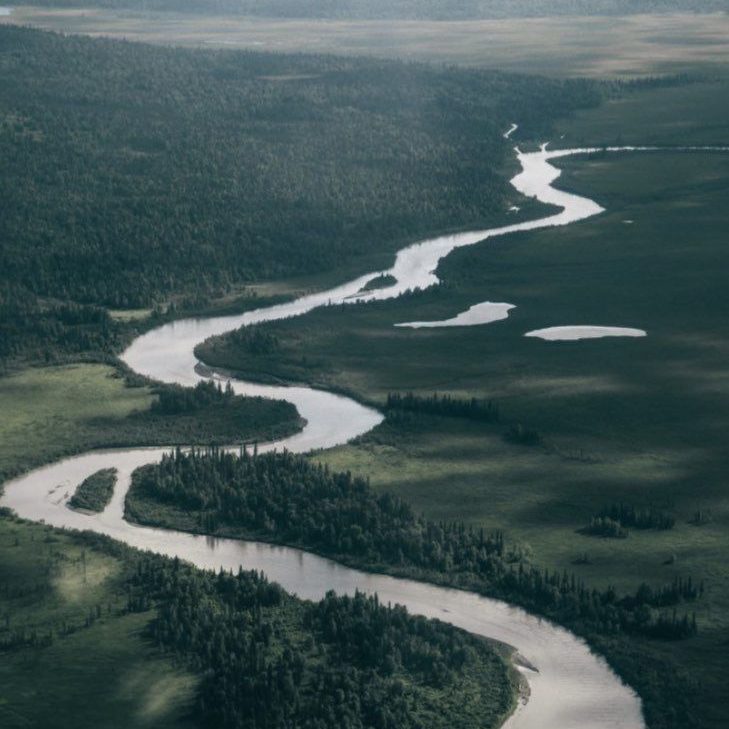
    We spend so much of our lives chasing a polished version of ourselves — as if one day we’ll wake up with a name that fits perfectly, a purpose that clicks into place, a life that finally makes sense. But the self is never meant to be a finished sculpture. It’s more like a river — shifting, expanding, carving new paths in quiet persistence.

    The harder you search for who you are, the more elusive it becomes.
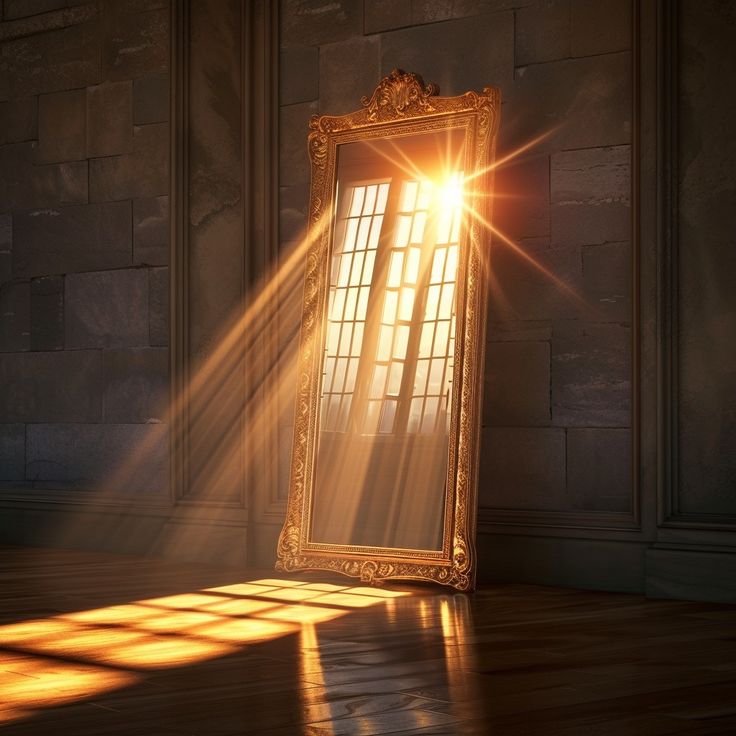
  • 8. A mirror that reflects the sun

    I am fool for thinking I can ever stop running. and they are a fool for waiting at the finish line. The mirror’s brilliance deceives both itself and others into believing that reflection equals illumination.

    Something I’ve thought about heavily recently is the concept of good and evil. What makes a person a good being and one a bad being. In philosophy, there are several ethical frameworks that outline what it is that makes a being good – for example, in virtue ethics states that a good person is one who develops virtues that strive towards moral excellence. In Utilitarianism a good person promotes the greatest happiness for the greatest number. In existentialist ethics, goodness in a person is found through creating value in our choices, living authentically and taking responsibility for the meanings, we create. And then we have the religious views of what it is to be a good person – someone who embodies love, compassion, humility and alignment with the divine or moral truth; being a good person often means transcending ego, acting selflessly and producing harmony with others.

    A view that has stuck with me the most, and the one I seem to question is the deontological ethic, Immanuel Kants Moral Philosophy. He states that the morality of an action depends on the intention behind it, not on the consequences it produces – for Kant, a person is good when they act from duty, meaning they do what is right because it is right, not because it brings pleasure, success or approval.

    “Nothing can possibly be conceived in the world… which can be called good without qualification, except a good will.” — Immanuel Kant, Groundwork of the Metaphysics of Morals (1785)

    A simple example of this would be telling the truth even though it can cause trouble, but you do it anyways because honesty is the right thing to do. Even if the result is unpleasant, your intention was moral, therefore making you morally good.

     But does having good intentions really make you a good person if those good intentions produce suffering in others? What if those good intentions seem good to the individual carrying them but doesn’t make sense to everyone else around them? Do you still remain a good person then?

    It is comforting to believe that good intentions make us good individuals, after all if someone means well, how can their actions be wrong. But I beg to differ and believe it is more complicated – good intentions can coexist with behaviour that causes real harm, whether it is physical harm or emotional and mental harm. A person’s motive may be pure, but when fear, ego or even emotional unavailability is present and blinding to the impact of their choices, perhaps that’s when their ‘goodness’ becomes questionable.

    I’ve been thinking about this from an avoidant perspective. As someone who has avoidant attachment tendencies woven deep into their soul being, I have questioned myself on several occasions whether or not I am in fact a good person.  See, avoidant attachment is not just about a relationship style – it is a lens through which the world is perceived, a filter through which we interpret love and connection. At its core it is a defence mechanism, an attempt to protect ourselves from the vulnerabilities of emotional closeness. It can begin early, often as an outcome response to early experiences that were too overwhelming, too unpredictable, or too painful. It is a learned behaviour – something picked up along the way, sometimes without even realizing it was picked up.

    When it comes to connection and love, whether platonic or romantic, it can feel like a heavy burden, an anchor that tugs too forcefully at the soul. And most cases this is where people think that we are people who are heartless, people who never cared to begin with, when that’s not the case – it is not that we don’t long for love, it is that we have internalized the belief that love demands something we can’t afford to give. We have learned to be hyper-independent, to guard emotions and to avoid leaning too heavily on others – so when this balance is disrupted, we instantly get pulled under and feel a sense of suffocation, of entrapment.

    Yet this need for emotional distance, this urge to protect ourselves from the vulnerability that love demands, often backfires. Because the very thing we push away is the thing that could possibly heal us, the very thing that can fill the emptiness we carry. We long for it, but we don’t know how to accept it without feeling overwhelmed, consumed or trapped.

    And here is where the paradox comes forward – we want connection, we yearn for the kind of love and connection that is deep and lasting, the kind that provides comfort safety and understanding. But the second it is within our reach; we push it away. We sabotage relationships with people, sometimes aware, sometimes unaware, we pull back when things get too close, when someone tries to love us in a way that feels too demanding, too dependent, too personal. We become distant and cold – retreating into ourselves to preserve the sense of autonomy and independence we’ve spent so long cultivating.

    Truth is, it’s not that we don’t feel love, or that we never loved a person: it is simply that we don’t know how to manage it. The emotions that come with love feel too big, too intense, too overwhelming that they don’t nearly fit into the walls we’ve built around ourselves. So, in return we detach before it implodes, we build walls higher and higher, each brick adding another layer of protection.

    Now back to the main point, as an avoidant, I tend to question if my ‘good intentions’ even make me a good person at all. Because even though I am aware of my avoidance, and that when it is triggered, I tend to push away not only for myself but because I know for a fact that the person involved will not receive what love asks from me. I am aware that because of my avoidant nature, I cannot give a person what they deserve, that is why I go into fight or flight and retreat. I used to tell myself that by detaching sooner rather than later, I am doing a good thing by protecting the other person from future heartbreak or from future withdrawals, but the more I’ve thought about it, the more I question if as an avoidant, even with right intentions, I can even be what is morally classed as a good person.

    Even though we care and truly love, avoidance often manifests as withdrawal, emotional distance or a refusal to connect deeply and the people who loves us most, become the ones who feel the brunt of this. To someone who just simply wants to love the avoidant, it can often feel like a punishment, a rejection.

    I will admit I have hurt people because of my avoidant nature; I’ve lost genuine relationships over distance and withdrawal all because I didn’t know how to sit with closeness. I’ve made people feel like they should apologise for their desire to be close, for just wanting to love me, when truth is, they should never have to apologise for such a thing – the work is mutual, they should be able to understand an avoidants fear, and the avoidants need to stop making those who love them the most pay for it.

    Love bombing can emerge from avoidant roots also, not in the same way as narcissistic abuse, but I will be honest I have had moments where I’ve also questioned if I’m really just a narcissist hiding behind an avoidant attachment style, not because it is the truth, I have been told professionally I am not, but simply because sometimes I feels like the damage I cause to others feels like the equivalent to what a narcissist would do. but love bombing for avoidants emerge as a panic response, sometimes we flood early intimacy with intensity, promises, poetic devotion – not because we are lying, but rather that in the moment, we want to truly believe we are safe. But as intimacy deepens, our nervous system gets flooded. The vulnerability becomes unbearable, so we vanish. Not because the connection and love weren’t real, but because it became too real, too quickly.

    This push-pull dynamic isn’t romantic nor healthy, for any form of relationship – it is destabilising, it erodes trust and if it is left unaware, it creates people to feel as though love should be earned, that safety is always temporary; that emotional warmth always comes with a cold front. The avoidants intention – to prevent harm – ironically becomes the very thing that causes it. In the good intention of trying to distance away in aim to create space for someone to get something better, something they truly deserve, we hurt them with suffering of neglect, lack of trust and betrayal – we make them feel punished for just simply trying to love.

    My avoidance, in most cases, proves to me how maybe I am not as much of a good person as I intend to be, even with my good intentions of attempting to prevent harm, I cause harm in other areas unintentionally – Hurt people hurt people, and I am a solid example of it. The way my mind decides to handle certain things in certain moments- it tends to forget that I’m not the only being on earth with feelings that need to be protected. Maybe I was doing the wrong things but with the right intentions, but even then, how is the person who falls victim to this supposed to know your intentions when your actions say otherwise.

    A person with good intentions but avoidant behaviour is like a mirror that reflects the sun yet never gives warmth. Their moral glow is only a reflection — an image of goodness rather than its living presence. They wish others well, speak kindly, and even recognize what is right, but their virtue remains inert – They mean well — they want to bring light, to be kind, to do no harm — but they stand always at a distance, untouched by the fire that gives life its warmth. True goodness demands more than right thinking; it asks for engagement, for the willingness to act even when it costs comfort or safety. The mirror’s brilliance deceives both itself and others into believing that reflection equals illumination. Yet genuine moral worth, like the sun’s light, lies not in the appearance of virtue but in the capacity to warm, to nurture, and to transform what it touches.

    Even though saying certain goodbyes doesn’t make me a bad person, I am not a good one either because I could’ve given kinder goodbyes, especially to those who were genuine. Even though letting go of certain relationships doesn’t make me a bad person, I am not a good person either because I allowed distance and silence to paint the conclusions that could’ve been made with communication. I am not a good person because I gave hope to people, promises I knew from the beginning I couldn’t keep – because in the desperate attempts of trying to heal and protect myself from this world, I fall and become the opposite of my ‘good intentions’. I don’t regret meeting people, I regret making them believe there is something to expect from me, when there isn’t. Maybe, within their hope for me, sparks a hope in me, and that’s what causes me to allow people in, even when I know the hard truth.  And the cost of it all is that we lose connections that could’ve still stayed if we had just sat a second longer rather than retreating, but most importantly, we emotionally damage people who didn’t deserve it.

    A lesson I learnt this year is that a person’s capacity for growth is directly linked to how much truth they can face about themselves without running away. As much as we try running away, I think the presence of self-awareness and our actions, independent from our internal intentions, is what brings out the truth, it makes you realise things you didn’t even think of within the moment, whether those things are good or bad.

    So perhaps, good intentions in fact does not make someone a good person, as goodness is not measured by internal motives alone, but by the effects of our actions also. But perhaps also, what defines a good person is the willingness to grow beyond intention, to face the discomfort of one’s own flaws, and to choose action that aligns care with accountability – that guilt we feel clarifies the want for change. It won’t undo anything that has already been done and set, as no amount of apologizing, no amount of remorse or regret can take back what’s already been set and let go of but – if there is guilt then there is awareness, and with that comes growth.

    – and with that I aim to do things differently, to become a good person.

  • 7. Traces Left In Clay

    “ a person is a person through other persons ” – Ubuntu philosophy

    During the moments where when I’m just casually walking the streets trying to get from a to b, when I am sat in a room silently filled with people are the moments where sonder hits the most. It is an obvious yet compelling concept to think about – of course every person on this earth has their own life, but to think deeper is to realise that every person faces complexities as vivid as yours.

    One person could be experiencing the best day of their life, maybe they won the lottery, while at the exact same moment, someone else is facing their worst, maybe they received a terminal diagnosis they never saw coming. One woman becomes a mother for the first time, while a few rooms down, another mourns the loss of her child – life is given to someone, while another loses it.

    You could speak to thousands of people in your lifetime, and none will share the exact same story. All those people you walk by on the street, you will never truly know what they carry. It’s beautiful in its own little way, how life is truly so vast that everything is happening all at once, and you don’t even know it – how everyone is shaped by things you’ll never witness.

    But what if sonder can also apply to those closest to us?

    We move through the world assuming we’ve mapped out the people closest to us. We know their coffee orders, their dating history, the last book they recommended – but these are surface level echoes, tidy exports of interior life – and interior life is rarely ever tidy. Our inquisitive nature is left often reserved for strangers and small talk.

    Truth is, we all contain secret cities, hidden interiors, rooms within rooms – these depths stay tucked away, because no one simply thought to ask, because life moves fast – because it’s rare to feel truly listened to.

    Funnily yet staringly enough, it’s often those closest to us that we stop being curious about. We fall into rhythms, into what we already know – hes the anxious one, she’s the advice giver, they’re the funny one – these roles we play so often we forget that they are merely just roles. Those closest to us become frozen in familiarity, their updates become unnoticed, and their edges dulled by memory. We stop noticing the slow tectonic shifts of their inner world. We relate to the last version of them we remember, not to the self still unfolding in real time

    Cognitive neuroscience has a name for this compressing tendency – it is called the “Theory of Mind” – our ability to infer what others are thinking or feeling. It is essential for empathy, but also means we’re constantly guessing, often lazily. We stop updating our internal models, we relate not to the person in front of us, but to their fossilized outline – we replace curiosity with prediction.

    But what if your closest friends still contain versions of themselves, you’ve never met? Versions of them that exist quietly, out of view, never for you to imagine – that gap between the person you thought you knew and the person besides you.

    What’s extraordinary is that our brain wants to model other people – it devotes much of its resting state to doing just that. The default mode network, the part of your brain that activates when you’re not focused on a task, spends so much of its time simulating other minds: rehearsing conversations, empathizing, reflecting, we are wired to think in relation.

    So, what happens when we take the shortcut of assumption? – we close off access to those rich simulations, and we lose touch with our own capacity for wonder.

    When we as humans come to the realisation of sonder, we are surprised by its vastness, not because the vastness has always been there, but because of how partial our perception had been, how much we flatten people into a convenient coherence, into a shortcut, because we are a species that likes shortcuts, that prefers something easy over something heavy – it is easier, after all, to compress people into neat narratives that fit inside our mental maps.

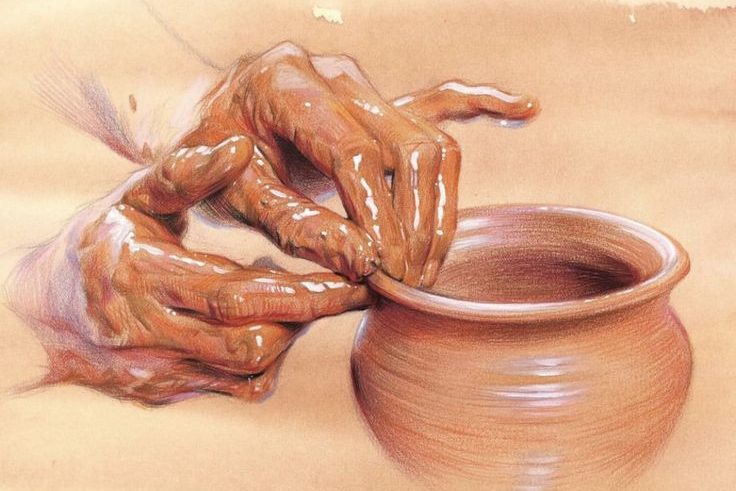
    But shortcuts don’t work when it comes to truly understanding someone. Clay doesn’t just shape itself into something – it needs the hands, the influence, the pressure, the guidance to take a form of something real, of something complex yet beautiful and meaningful. Without that, the clay stays the same – unshaped, unaware, stuck in a loop with no identity. You can’t skip steps when it comes to pottery, there are no shortcuts. People are like this too, shaped by factors and environments that we have no knowledge of no matter how much we think we do. What we assume may sometimes be half of the truth, but it is never the full truth.

    It’s never about lack of depth, everyone has depth, it’s about lack of invitation“if someone seems boring to you…it might be that you don’t know how to prompt them. You probably don’t know how much beauty lies hidden in the people around you” [Henrik Karlsson]. Actions speak louder than words, but words are actions, they land and rearrange. They build scaffolding for thought and memory – they reshape what becomes sayable, and in turn, what becomes thinkable. It is thew sole reason why a well- placed phrase can rewire your inner architecture, why a question can unlock a forgotten room, why a conversation can leave behind an invisible structure that you’ll forever keep returning to.

    When we really listen, we do more than just hear and begin to regulate. Our attention transforms into a co-therapist, a kind of social nervous system. This is called “Co-regulation” in polyvagal theory – it is the way our bodies attune to one another’s tone of voice, facial expression and breath. When someone listens gently with curiosity, your vagus nerve responds, your stress lowers and your capacity to think more freely expands.

    We don’t need to travel far to discover new worlds. Sometimes, they’re sitting across from us, sipping on the coffee order you’ve memorised, waiting to be seen again. Everybody in their lives is really waiting to for people to ask them questions – so then they can be truthful about who they are and how they became what they are,

    Ask the questions that linger, open and reveals. Listen for the answer, the pause before it, the subtle shift in posture, the breath they take before something brave. Because every interaction is a quiet invitation to be more alive with each other, to be mid-bloom together, to see, and be changed by the seeing.

    Vastness surrounds us, it is the sole reason for sonder, but it also surrounds us in the forms of those closest to us.

  • 4. The Fig Tree

    I want to be an encyclopaedia of lives and ideas – I want to know everything about everything.

    I will be turning 21 four weeks from now, and as the number of my life increases, I can’t help but feel smaller each year. Like I haven’t moved and just stayed in the same spot as I was in last year. I wouldn’t call it lazy; I’d describe it as a paralysis.

    Every now and then I catch myself looking at the profiles of people I used to attend high school with, just out of curiosity to see where they are in life – many of them have gone out to see the world, some in relationships with their high school sweethearts, some have expanded on their experiences for their life careers. I can’t help but feel this overwhelming paralysis in the face of expectation, like by now I should’ve become something, meant to have aimed, achieved and succeeded – like my story should be half filled with chapters to tell.

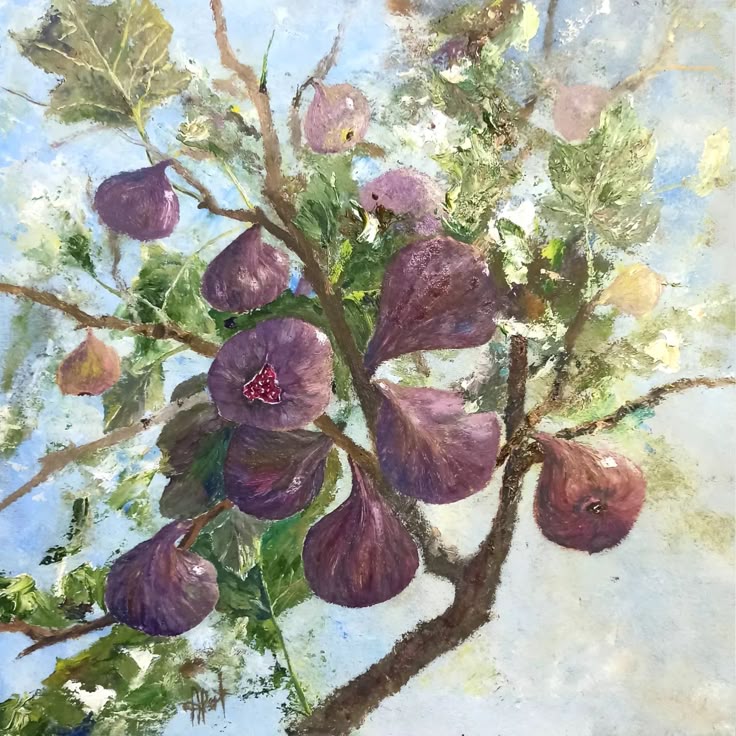
    ‘I saw my life branching out before me like the green fig tree in the story. From the tip of every branch, like a fat purple fig, a wonderful future beckoned and winked. One fig was a husband and a happy home and children, and another fig was a famous poet and another fig was a brilliant professor, and another fig was Ee Gee, the amazing editor, and another fig was Europe and Africa and South America, and another fig was Constantin and Socrates and Attila and a pack of other lovers with queer names and offbeat professions, and another fig was an Olympic lady crew champion, and beyond and above these figs were many more figs I couldn’t quite make out.

     I saw myself sitting in the crotch of this fig tree, starving to death, just because I couldn’t make up my mind which of the figs I would choose. I wanted each one of them, but choosing one meant losing all the rest, and, as I sat there, unable to decide, the figs began to wrinkle and go black, and, one by one, they plopped to the ground at my feet.’

    So here I am not knowing what I want to do with my life, not because I have few passions or because I am unsure of what I want, but because I possess many of them, I am haunted by the want to be every version of myself, I want to be an encyclopaedia of lives and ideas, I want to know everything about everything – yet I know I can’t taste every fig and I hate the idea that choosing one life means grieving the others. Each fig is an overflowing fountain I’ve only dipped my toes into and so the idea of time consumes me because what if I never have the chance to bathe in each pool. I want to be great, but in a generation like ours, being great isn’t enough.

    I can never read all the books I want, I can never be all the people I want and live all the lives I want, I can never train myself in all the skills I want – and why exactly is it that I want?, I want because I want to live and feel all the shades, tones and variants of mental and physical experiences possible in my life but I am horribly limited. It is exhausting to want so much yet when you stand in front of your life, all you see is fragments, a trail of unfinished attempts – the worst part of it all is that I still continue to want to be everything.

    Fearing of deciding isn’t about failing at trying everything, the scariest part is that I’ll fail at everything, that I’ll come to the end of this life and go out with the realisation that I was never good at anything.

    Maybe that’s what it is – that even though you don’t have to be good at something to have a meaningful life and joy can exist in mediocrity, deep within me all I want is to be remembered for something, to be more than just fragments.

    Maybe I just want the feeling of being good at something, the relief of knowing I belong somewhere, the validation that I am not just passing through life without leaving a trace – and I guess that’s where the satisfaction that comes in,  from thinking of yourself in different possibilities, feeding on the illusion and greed of having multiple lives and experience different successes whilst the one life you do have is passing by without you pursuing a singular fig.

    Theres a contradiction that arises from wanting, it’s a mess between doubt and commitment, because to want is to commit. I want to be everything, but I don’t want to spend the time it takes to be one thing, I want to master a craft, like play the violin, but I want to taste all the other arts too, I want to be special, but I don’t want to endure the ordinary years it takes to become so. Time is a terrifying thing, and committing to something means the ticking will commence on whether you succeed.

    As I sit at the crotch of this fig tree, starving myself to death because I just can’t make up my mind on which fig to choose which one to taste and savour, I come to terms that it isn’t about choice at all, but rather about doubt. It is doubt that paralyses my body when I stand before this tree of life, it’s not only an inconvenience, but it is also grief – doubt of not enjoying the richness of the one fig I finally choose as I expected I would, and grieving all the other figs I could’ve devoured instead. Grieving the time I had lost or the potential I could’ve had.

    As I lay here under the branches, eyes tracing each fig like a possibility, like a life that could be. The perfect figs, untouched goals still within reach. The bruised figs, mistakes maybe worth making and the rotten figs—those struck something deeper as they are the what ifs left too long., the dreams that deferred until decay. And then it hit me like a sharp breath: waiting doesn’t preserve anything—it only delays the rot.

    What if I am not the person who is choosing the figs – but rather I am the tree itself growing them. Choices are always fleeting, what makes us human and sustains us through life are our roots, and our ability to whether change. The fig tree roots runs deep and blooms in seasons. The tree itself doesn’t worry when a fig falls and rots, because it knows it will bare new ones. Doors are opening and closing all the time, just like how a fig tree loses figs and grows new ones.

    It has taken me an embarrassingly long time to also come to the acceptance that not every fig needs to be picked – sometimes you’ll see its leaves accompanied by ripe figs, would you go to pick at its branches knowing that its sweetness has not yet prospered, that its bitter taste will displease your honeyed cravings? – realistically no, so why rush into picking it when you know your present self is still yet to bloom. And simply put, not every life path is meant to be walked by you, some figs may have to be sacrificed for another fig – by this I don’t mean giving up what you want, I mean the things that aren’t essential, the things that don’t carve out the essence of your desires but the things people ‘ expect from you’. You are the tree, you are who grows these opportunities, and they are for no one to pick from but yourself.

    Now at almost 21, My paralysis slowly begins to release me, I feel my leg twitch, allowing me to move forward and then my arm, allowing me to reach – I am the one who is nurturing these choices and growing them, yes, I am trying to choose, but at the same time – it is still all me. Because if I couldn’t bare all these figs, then I wouldn’t have the desire to want them all. The worst part isn’t picking the wrong fig, it is the time passing as we sit and be indecisive, it’s watching potential rot right in front of you, not because it wasn’t yours, but because you were too afraid to reach out.

    Another take is that just because a fig falls, doesn’t mean it instantly shrivels up, it begins to rot with time and abandonment. Time is not unlimited, but that doesn’t mean we must have a deadline for when we need to achieve, why not collect all the figs  in a basket, have a little taste of each one, make a jam out of the rest so on some mornings you can return to it, to spread on a piece of bread.

    Because truth is, us as humans are never fulfilled, we will always crave more with every fibre within our bodies, so deciding on one thing is more so suffocating rather than liberating – something within us wants more, we can’t just simply rest.  They key is to keep moving, to never stay still – don’t allow making a singular decision paralyse your body. Why settle for one, when you can explore many things, this life has to offer, for we are not managed by time, we are the ones who manage time.

  • 3. Truce Over Coffee

    ‘ between them, the coffee cooled like a truce neither wanted to end.’

    They say the heart wants what it wants – but they often tend to leave out how quickly it truly wants something. Long before the mind has had time to analyse, question, or rationalize all the potential ‘ifs’ and ‘buts’, the heart has already made its move. It leaps, it aches, it decides – without any second thought, without the mind. And often, we only realise the weight of that decision once our mind finally catches up.

    Love, hope, fear and pain – these are not things we as beings intellectually process first. They arrive unannounced, stirring something deep within us. We feel the pull of someone new, the string of a goodbye, or the thrill of possibility; in that moment – no amount of reasoning can restrain what we feel. We act, speak, or fall in ways that logic cannot always justify.

    Some may say the heart is reckless, some say its honest – as it doesn’t wait for a perfect plan or a guaranteed outcome. It operates in truth, in instinct, in raw emotion. That’s its beauty – but also its own burning danger. It’s what pushes us to take the risks and open up, even when our minds are screaming warning signs.

    But of course, the head eventually catches up, and with a heavy breath finally steps in. It runs the numbers, weighs the consequences and scolds the heart for being too eager. But majority of the time, the mind is too late, and the heart has already changed the course of everythingand what’s done in the name of feeling, can’t always be undone by reason.

    This change of course is what most fear – it’s what I feared, it’s what has come true, and it’s what I continue to fear this very day. Although allowing yourself to feel every ounce of emotion is a natural thing, a beautiful one at that, the fear of the aftermath, of the possible destruction it may cause, is what has placed my heart into lockdown and my mind onto a pedestal – some may even view my mind as a tyrant for how much power it holds over my heart. Because even though it’s what keeps me safe, when my heart is offered something pure, something it yearns, no matter what – my mind will always say no and my heart will just accept in silence, no matter how much it aches.

    I guess some may argue that with destruction there can arrive peace also, but something within me has altered to not want to go through destruction for the sake of a possibility of peace. I’d rather sit still and wait for it to arrive when its time for it to, so I can feel all its glory in one piece, rather than go through the possible hell just for a possible peace to arrive – yes it arrives, but what at cost?

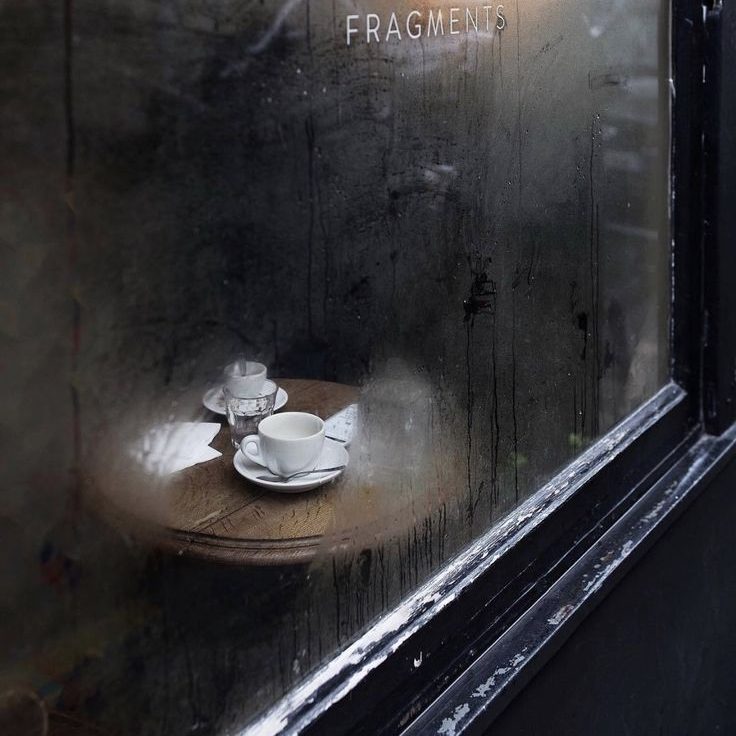
    It is as if after the last leap the heart took, the heart and mind sat across from each other in a quiet café, both nursing to their scars, two coffee mugs between them with steam curling upward and fading into the still air. They sat in a weary discussion, the mind pointing out how the heart always leapt like a flame towards any slight flicker, leaving the brain behind to gather the ashes. And for once the heart decided to listen, not to defend or argue – but to understand, as it stared down into the coffee, stirring without drinking, the mind, measured and calm, laid out its reasoning like a blueprint, showing how logic could protect them both from the wreckage of impulse. Silence stretched between them, the heart finally began to see the wisdom in restraint, in thinking before feeling too deeply. As the air filled with the heavy weight of lessons the heart had always been too eager to learn, the heart nodded in a quiet understanding, reaching for the coffee in a rare moment of stillness – the mind let out a bittersweet sigh, a mix of relief for the weight lifted but also resignation because it had noticed between them, the coffee had grown cold, as if it was symbolism for it being too late, or perhaps it grew cold like a truce neither wanted to end, but it was a quiet reminder that even peace takes time and with that – neither one took a sip and left behind their truce to steep in a cup, forever to remain untouched.

    I sometimes wonder if the reason for why I can’t seem to maintain relationships or friendships well, or for why I view things so harshly and raw is because of the decision of allowing my mind to be in control. As some people balance the heart and mind, only allowing one or the other out when it’s called for, I chose to only allow my mind to have the privilege to that freedom of stepping out in the open, I don’t really have a clear understanding as to why – all I know is that I fear the past from reoccurring, or that I fear others being hurt from my own actions – but that’s the funny thing, in the process of allowing my mind to take control with the aims of protecting myself and others, I end up hurting myself and others anyways – I wonder if my heart finds it comedic or is at utter distraught at the fact the sole reason its caged up is so it doesn’t have to be faced with pain, yet it is happening anyways, only difference is the pain I face isn’t something I feel or show emotionally, I feel it mentally – it shows in the way I think, in the way I write, in the way I perceive – you wont see me crying but you’ll see me view or word something a certain way, not because I’m hard headed, but because I’m emotionally incapable to allow myself to feel, at least out in the open anyways,  so I express my emotion via my thoughts, my words.

    It’s sort of sadistic to say, but I prefer it this way, it offers me a reassurance knowing that my mind wont have to run after my heart and scold it and yell ‘ I told you so’ – I prefer my mind making me aware and alert from the beginning ; not having to have my heart ignore it and continue, to then later return back being hurt – I prefer my mind expecting to be disappointed before anything has even happened rather than waiting for it to come out of nowhere, unprepared. Unfortunately, the price I must pay for this is that I appear unaffected by things that should clearly have an effect, which they do, I just don’t allow myself to physically and emotionally show it – only mentally – my mind just transforms emotions into intellect, my mind is the tyrant remember. But people don’t get that, they see it as cold hearted, someone who doesn’t care – but I don’t blame them when they view me like this, when you become someone who is surviving rather than living, someone who doesn’t allow their heart that sort of freedom, it’s expected to be viewed as heartless.

    However, as much as I find those who set their hearts out to be free to make every decision as foolish, I will admit, there will always be a silent admiration for those individuals. Because there is something profoundly human about this imbalance. It’s what allows us to love people we shouldn’t, chase dreams that seem out of reach and hold onto hope in hopeless moments, The heart may not always be right, but it’s often what makes life worth living.

    Acting from the heart can lead to heartbreak, disappointment, or regret – but it also leads to our most meaningful experiences – the moments we remember long after logic has faded. Those impulsive choices, those emotional leaps, they shape who we become.

    As often as I value control and caution, I do believe there’s courage in being led by feeling. Theres quiet a bravery in trusting your heart to guide you, even when the path is unclear, my heart, under its chains and locks, envies yet yearns for this kind of bravery – because while the mind might keep you safe, the heart is what keeps you alive, and sometimes I do question if me shutting off my heart emotionally is the sole answer to all my ‘whys’ – if the past made me shut off my heart, then maybe I am the way I am because of that reason too.

    Maybe the mind is there not to restrain the heart, but to help it find its way home – when will I allow that to happen? I don’t know. Instead I never go near a cup of coffee again.