Tag: love

  • 10. The slow burn of a river

    little by little, you carry away what no longer belongs to you—sand, silt, dirt – and then somewhere far downstream, you look around and realize you’ve become something undeniable. Not through a single plunge or a sudden flood, but through a long, patient insistence on being exactly what you are.

    We all believe that we have all this time left, that the future seems worlds away. But in the blink of an eye, time has passed by, and I am now in my 3rd year of university. the future that seemed so distant and far away now breathes down my neck, reminding me of its urgency – and I’ve never felt so sure yet so completely and utterly lost at the same time.

    Caught between my aspirations and fears, there are days where I feel suffocated. Wrestling with being present and intentional whilst feeling like I’m aimlessly floating in an endless void that leads nowhere. Caught between having the desire to achieve anything and everything I want but not feeling good enough to do so.

    And let’s not even tap into my own self-image. Because most days, I don’t even understand myself. Currently trying to become my own person while battling the voices from my past, the judgment of others, and the discourse happening in the present. Most days, my body feels like some kind of foreign entity; at times, we coexist peacefully, and at other times, it’s a constant war.

    Without a doubt I can proudly say I’ve come so far in the last few years, but yet I feel nowhere near where I want to be. The human experience is truly so unique and vast, I don’t think any number of words could ever really express what it’s like. But then again, that’s what this article is for me, an attempt at vocalizing and formally expressing those emotions that have flooded me in recent days.

    There is this quote by Van Gogh I really like, which says:

    “Life is a terrible reality and we ourselves are running straight into infinity”

    This life we get to live is ever-changing, beautiful, and tragic; it is impossible to wrap our heads around it all, to understand it all, to find an answer for it all. However, we live in a constant state of exploration, as every day we wake up and choose to pursue new answers, perspectives, and narratives. With each day, I, we, grow wiser and hungrier to find the answers we crave, and it is all in the attempt to build ourselves.

    But the making of ourselves is never an easy task, especially when we’re all brought up so differently. We’re all raised and taught different perspectives and outlooks on life. We all come with a set of beliefs, philosophies, and approaches to life that are given to us by our respective parental figures or just simply the environment we are surrounded by.

    However, for all of us, there comes a point in our lives when we wake up and realize that we, too, want to shape our own perspectives. We, too, want to analyse and process the world in a way that is ours to claim. It is no simple feat, but it is a process that all of us undergo one way or another; no matter the cause, we all set sail on the path towards becoming ourselves.

    Unfortunately, a tough realisation to this is that becoming your own person can be one of the most painful processes we go through in our lifetime. Why? – because the journey has no beginning or end. But I think for most of us, for me defiantly, it awakens when freshly entering into adulthood. Ever since I hit my 20s, 21 now, I can feel it creeping behind me and breathing down my neck (dramatic I know), manifesting itself as questions, arguments, and disagreements. It’s a deadly whisper, a quiet thief that shows up at our doorstep one day and robs us of all certainty.

    adulthood has always been painted as a kind of destination. as kids, we imagined that one day, without warning, the world would hand us a badge that says “grown-up.” we thought it would come with certainty, competence, and an unshakable sense of self. but then it happens, you turn 20 and realize the badge never arrives.

    It is an uncomfortable and weird process to get up one day and have it all hit you that everything you once deemed certain and indisputable is now fleeting and uncertain. It shakes you at your core, unsettles your soul, to go from feeling like you know yourself to looking in the mirror and seeing a stranger staring back at you. Everything you’ve built crumbles before you, and you cannot stop it; you can only hope that it can be rebuilt.

    But how do you build something you’ve never seen before? How do you fix something you never even knew needed fixing?

    Having your dreams, morals, and belief systems confronted can be disconcerting. Accepting that we no longer see things the same way; no longer want the same things we used to is incredibly confusing. Especially when you’re entering the realm of adulthood and everyone is scrutinizing your every move, expecting you to have it all sorted out.

    Which is why some of us enter this state of negation, in which we repeatedly tell ourselves that this is simply “a small crisis.” This is where denial kicks in.

    We resort to our old ways, hoping that with the remaining pieces we can rebuild ourselves again. We cling to our previous beliefs, in search for an answer, in search for some hope. Trying to convince ourselves this is a mere bump in the road, a small detour that’ll take us right back to where we used to be. However, as we try to rebuild, our building crumbles because our foundations are no longer there.

    Our old foundations no longer support us because they no longer represent us; they no longer align with our souls. But alas, we attempt it, not because we trust in the old foundations but because they are familiar and of course, being the beings, we are – familiarity feels safe, as opposed to launching ourselves into the unknown. Though deep down, we know and we acknowledge that this is no longer who we are, yet we hesitate to move forward, we hesitate to ask questions, because there is nothing more terrifying than going in a direction we’ve never been.

    Right here, in the known, in the familiar, this feels comfortable, this feels safe. But it is a fallacy, a facade; it is not who we are, but merely a blueprint that was crafted for us before we even had the capacity to consent. That familiarity is simply artificial, a bunch of make-believe fabricated to convince you that you are the person they taught you to be. And for a long time, it works; you grow up thinking this is who you really are, certain that your thoughts belong to you and that your beliefs are truly rooted within you.

    We’re conditioned not to question or doubt them because how can they be wrong? How could something you’ve always known be wrong? How can something we’ve been taught since the day we were born be wrong?

    It can, and one day, at a time when you least expect it, it all crumbles. The world that was once predigested for you now sits at the pit of your stomach, whole and heavy. Now it is you who has to consume the world and digest it on your own. This process can be uncomfortable, and we might sometimes choose things that unsettle us, but that is just a part of it. As we leave our past circles and enter new environments, we learn and unlearn, and we’re presented with new perspectives, ideas, and beliefs that challenge our current systems.

    As you begin rebuilding, you’re met with a million questions. Flooded with a trillion possible answers, and trying not to drown underneath them. And with everything you’ve ever known collapsing before you, life begins to feel infinite. The world that was once so simple becomes intricate and complex. Nothing is simple anymore; reality is tragic, feelings become profound and immeasurable, and you are but the shell of the person you once were.

    Despite all this, you pick up the pieces, dissecting them one by one. You begin to learn to ask hard questions, to take the good and leave the bad. To tread carefully when making difficult decisions. You begin to experience the world through your own unadulterated lens. You start shaping your own views and become the author of your own opinions.

    Truth be told, half of the time you will be unsure, most days the world and its persuasiveness might get to you. You will have to wrestle through it all, be open to other points of view without compromising your own and let others confront your opinions without yielding all control. Your dreams will be scrutinized, how you dress will be scrutinized, the movies you watch, the books you read, and the music you listen to. It will all be dissected and labelled, but through it all, you must not let it determine who you are.

    Identity is just the sum of the choices we make. We live in a world of infinite paths and endless possibilities. We can be anything, but choosing one thing means grieving the thousands we didn’t.

    When everything is possible, nothing feels certain. I’ve always wondered if I was on the “right” path, if some alternate version of me— the one who chose differently—might be living a better life.

    Choice, in theory, is freedom. But in practice, it can feel like a quiet paralysis. The world keeps spinning forward, while you’re still stuck. But maybe the point isn’t to choose the perfect life. Maybe the magic lies in choosing a life—your life, and walking it fully. Because when you do, even the smallest step begins to feel sacred. Not because it was the best possible choice, but because it was yours.

    Please don’t allow yourself or the world to condemn you for not knowing it all yet, for not having a concise answer to every question, for not having achieved your dreams yet. Remind yourself that you have set on a path of learning and discovery, a process many will delay for the sake of comfort and security.

    Oftentimes, the people with the most things to say are the most scared of all. They hide behind a facade of confidence and wisdom, but really, they are just as terrified and insecure as you are and are desperately hiding it.

    So, whenever you find yourself feeling doubtful about your decisions because of someone’s disapproval, remember that it is because you’ve probably made them confront their own uncertainties. And that is a sort of discomfort not everyone knows how to deal with.

    This can lead to people leaving us, but we need to remember that this, too, is part of the process.

    It can be a lonely path; growth and evolution can come with disapproval. People may not react kindly to this new person you are becoming, because the world isn’t always gentle or accepting of change. We might outgrow people, have difficult conversations with our loved ones, and we may have to leave or put distance between ourselves and them if they no longer align with who we are.

    With every passing day, we might find fewer and fewer things in common between ourselves and the people we’ve always known. Conversations begin to cease, and the desire to see each other may decrease until ultimately you no longer speak. On the other hand, there may be more destructive fallouts, arguments, and discussions may arise. Be it because you differ from someone’s political views, morals, or opinions. You may find yourself exasperated as you try to dabble in the attempt to make your voice heard to others.

    You may grow tired of explaining yourself as you set new boundaries for people who are used to you never having any. There will be days when you have to walk away, for the sake of yourself, and sometimes simply for the sake of salvaging whatever is left of your relationship with the other.

    Despite all of this, I want to say that it’s okay, it is perfectly valid to leave spaces where you’re no longer welcome simply because you disagree with others’ perspectives. I assure you that when one door closes, another one will open, new spaces and people will welcome your questions, perspectives, and ideas.

    In the same way that there will be people who challenge your newfound beliefs, there will also come people who cherish and indulge in them. People who will appreciate your outlook and help expand it at the same time. Spaces that will welcome your ideas and help them grow.

    The (dis)comfort of not knowing

    I would be lying if I said that I have all the answers now and everything figured out. And I will not pretend that it’s not excruciating. There are days when this ambiguity cuts me apart until I have nothing but the weight of my own breath and the haunting echo of “figure it out” constantly trailing me.

    But maybe there is a subtle grace in this uncertainty. Maybe not knowing is a liberation that allows us to rebuild without obligation, to become without inherited expectations. The self is never truly lost; it just waits to be rewritten.

    There’s comfort in discomfort. For every piece of you that was shed trying to fit into someone else’s shape, you’ve been gifted space — vast, open rooms within yourself where beauty can take root. This time, you get to decide which adjectives describe you.

    So for me personally, and where I’m at in life right now, I feel that the most important part of this entire ordeal is acceptance. Acceptance of your incompleteness, acceptance of your inadequacies, of your doubts, and your failures. Giving ourselves some grace for not having it all figured out, for changing our minds, for not knowing what we want just yet.

    Be okay with messing up, asking questions, and challenging the answers. Learn to let yourself grow in both abundance and deficiency, to allow yourself the space to recognize your errors and fix them, to ask forgiveness when needed but not have to when you’re not at fault. Embrace your humanness, your vulnerabilities and emotions, as well as your strength and resilience.

    This is the journey of a lifetime, an ongoing attempt at being the truest we can be to ourselves. This may look one way in our twenties and completely different in our forties, and that too is okay. The answers I find at twenty-one may not align with the ones I find at fifty, which is okay. We can be so sure of something one second and then not agree with it years later. We may invest so much time into a specific career and, further down the line, fall out of love with it. As well as we can fall in love with something at 13 and still love it at 60 – just like how at 21 I still love certain shows and games (yes anime and Roblox) back when I was a child/young teen.

    Bottom line is that it is hard to know; it is only by trying and challenging ourselves that we will be able to find out what it is that makes us feel alive. Life is so fragile and uncertain, and I am growing tired of rejecting this uncertainty, so I want to embrace it. To allow myself to grow in the areas I’m most scared of, to confront those ideas deeply rooted within me, and truly determine what they mean to me.

    I want to accept myself now and stop putting a due date on this acceptance. To stop waiting for certain things in my life to align, to say that I embrace who I am. Because the truth is, there is no telling if we’ll even get there. The version of me that is perfect and has her life “put together” only exists in the fiction of my mind. But the version of me that is messy and insecure exists right now, and I want to accept her, to tell her that she’s deserving of everything just as she is now as much as she will be in the future.

    So, stop waiting for the completion of your goals or to tick certain boxes to accept yourself. Accept yourself now, love yourself now, be yourself now, because life is much too fleeting and much too fragile, and whatever the future you want, it starts right here and now. In the honest attempt to accept yourself.

    We spend so much of our lives chasing a polished version of ourselves — as if one day we’ll wake up with a name that fits perfectly, a purpose that clicks into place, a life that finally makes sense. But the self is never meant to be a finished sculpture. It’s more like a river — shifting, expanding, carving new paths in quiet persistence.

    The harder you search for who you are, the more elusive it becomes.
  • 9. Let them wander

    Your reputation is built through consistent action over time, not through desperate attempts to manage every interpretation of your characterIt is not your job to make sure everyone’s perception of you is accurate.

    We all carry a heavy load in the quiet, unseen corners of our hearts, we are familiar with it as the weight of how we are seen by others. How we are perceived, defined, and boxed in by the label’s others attach to us. And often, too often, we make the mistake of believing that how others see us is how we are. But the truth is, perception is a fragile, fleeting thing. It shifts with every passing moment, every passing thought. Perception of something is not permanent – It’s not grounded in our essence, our truth. It’s grounded in how the observer chooses to see, or fails to see, us.

    There is a particular kind of sadness in being misunderstood, a sadness that cuts so deep because it feels like it challenges the very core of who we are. It’s painful when the ones who are supposed to know us best, our family, our friends, the ones we’ve shared the most intimate moments with, misread us, judge us, or, even worse, hold us to expectations that were never ours to begin with. They might look at us and see who they want to see, not who we truly are. They might see the mistakes we’ve made, the missteps we’ve taken, the parts of us we’ve outgrown, and mistakenly decide that this is who we will always be.

    We operate under a comforting fiction that if we just work hard enough, explain ourselves clearly enough, or plan meticulously enough, we can shape our reality exactly as we want it. This belief drives us to over function, over explain, and over worry. We rehearse conversations that may never happen. We structure elaborate defences against misunderstandings. We treat every setback as a problem to be solved rather than a reality to be acknowledged.

    The truth is far simpler and far more liberating. Most of what happens in our lives exists outside our sphere of influence. People will form opinions about us based on their own experiences, wounds, and perspectives, not on our carefully crafted explanations. Circumstances will shift in ways we never anticipated. Days will unfold badly despite our best intentions.

    This isn’t pessimism. It’s clarity.

    There are things that consume more energy than the need to be understood. When someone misreads our intentions or misconstrues our words, something in us is irked. We feel compelled to set the record straight, to make them see the truth, to ensure they know who we really are.

    But that urgency only reveals that we’re trying to control someone else’s inner world. We’re insisting that their perception must align with our intention. And in doing so, we give away our peace to anyone willing to misunderstand us. The people who matter will give you the benefit of the doubt. The people who don’t won’t be convinced by your explanations anyway. Your reputation is built through consistent action over time, not through desperate attempts to manage every interpretation of your character. Being misunderstood is not a crisis. It’s a natural consequence of being human in a complex world where everyone carries different lenses.

    So – what do we do with this hurt? How do we carry the weight of being misunderstood, especially by those we love?

    The first step, I believe, is to realize something painful yet liberating: you don’t owe anyone your authenticity. Not even the ones you love most. Not even those who have known you your entire life. You don’t owe them the version of yourself they are comfortable with.

    The truth is no one can fully understand the complexity of another human being. No matter how much they love you, no matter how much they think they know you, they will never, ever have the full picture. They will see parts of you through the lens of their own life, their own experiences, their own assumptions. They will fill in the gaps with what they think is true, and sometimes, that truth is so far from the real thing, it’s almost laughable.

    But here’s the thing: they don’t need to understand you to love you. And you don’t need to be understood to live in your truth. And it is also not your job to make sure everyone’s perception of you is accurate.

    Let them be wrong about you. Let them misunderstand your choices, your silence, your decisions. Let them mistake your independence for arrogance, your strength for coldness, your need for space for rejection. Let them label you with the words that fit their expectations. Let them be wrong. Because, in their misunderstanding, there is a deep freedom for you.

    The most freeing thing you can do is to stop trying to prove yourself to anyone. Stop waiting for their approval, their validation, their understanding. Live fully in the person you are becoming, even when they can’t see the evolution. Live your truth even when it makes them uncomfortable, even when they challenge you, even when they want to pull you back into the small box they’ve created for you.

    I’ve often thought about how painful it is when the people who are supposed to be your biggest supporters, the ones who’ve watched you grow, don’t understand the reasons behind your decisions. They see you changing, and their instinct is to hold on to the person you were before. But you have to change. Growth means leaving behind the person you were and stepping into the person you are becoming. And sometimes, people who love you can’t let go of the version of you they feel comfortable with.

    The hardest part is not letting their misconceptions break you. It’s not allowing their judgments to shape your identity. It’s allowing them to be wrong, and still, remaining unapologetically who you are.

    Let them be wrong about your decisions. Let them be wrong about your relationships. Let them be wrong about your career, your dreams, your fears, and the way you navigate the world. Their judgment will never define you unless you give it the power to. The weight of their wrongness is theirs to carry, not yours.

    We spend so much of our lives trying to get others to see us the way we see ourselves. We want them to understand the reasons behind our choices, the deep, personal motivations that drive us. But in the process, we lose sight of something essential: our worth is not bound by their understanding. Your worth is something intrinsic, something that can’t be captured by their limited view of you. It’s something deeper, something richer. And while you might long for them to understand, the truth is, their understanding isn’t what makes you valid.

    This doesn’t mean you shut yourself off from the people you love. This doesn’t mean you stop sharing, stop explaining, stop striving for connection. It simply means that you have to give yourself permission to be misunderstood. You have to allow others to hold opinions about you that are not rooted in the full reality of who you are. Because at the end of the day, their opinions are just that, opinions. And while their love and care matter, their ability to grasp every nuance of who you are does not.

    This might be the most painful lesson you’ll ever learn, but it’s also the most freeing: you can still be loved, still be accepted, and still be enough, even when others get it wrong.

    There will be moments when those who love you most will misinterpret your silence, misread your intentions, or question your choices. And in those moments, it’s important to remember that their wrongness doesn’t invalidate you. Their inability to see you as you truly are doesn’t diminish your worth. It only reveals their limitations, not yours.

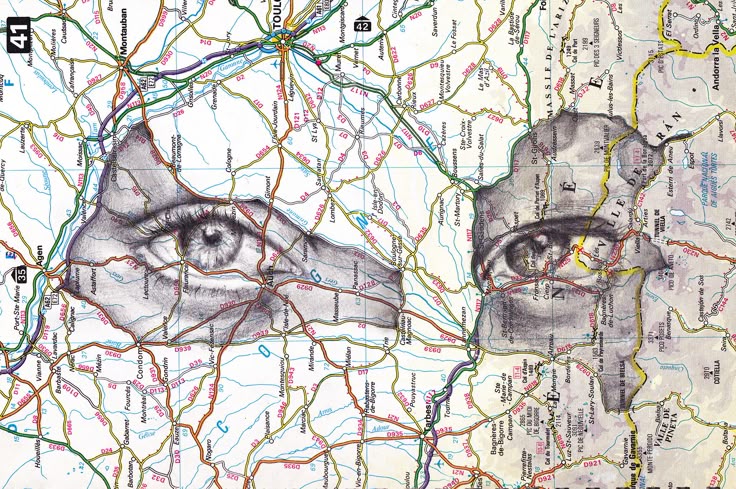
    You’ve tried handing them a map of who you are — every path carefully drawn, every detour explained, as if clarity could guarantee understanding. You wanted this map to be easy to read, to spare them the effort of getting lost. But people rarely follow the directions you give them, that’s the thing about giving people a map, most won’t read it. They’ll glance once, fold it the wrong way, and still wander off in their own direction. They take shortcuts through your silences, mistake your stillness for walls, your depth for danger.

     You need to learn to stop drawing these maps for people who only spare a singular glance, to stop drawing paths for people who never intended to walk them carefully. Let them wander instead. If they mistake the forest for a maze, that’s on them. The truth has always been here — steady as the trees, patient as the roots. Some people will circle for years and call it confusion; others will stand still long enough to notice the clearing.

    So, let them be wrong. Let them misunderstand you. Let them make judgments from a place of limited perspective. You are not defined by what they think of you. You are not defined by their opinions. You are defined by your truth, your authenticity, your courage to be who you are, regardless of whether they see it or not.

    Peace doesn’t arrive when everything goes right. It emerges when you stop requiring everything to go right. It shows up in the quiet moments when someone misunderstands you and you choose not to spiral into explanation.

     Because one day, when they look back, they will see what you’ve always known: that the truest thing about you was never their perception of you, but the quiet, unwavering conviction you held in your own heart. And in the meantime, let them be wrong. Let them think what they will.

    Your life is yours to live, no one else’s.

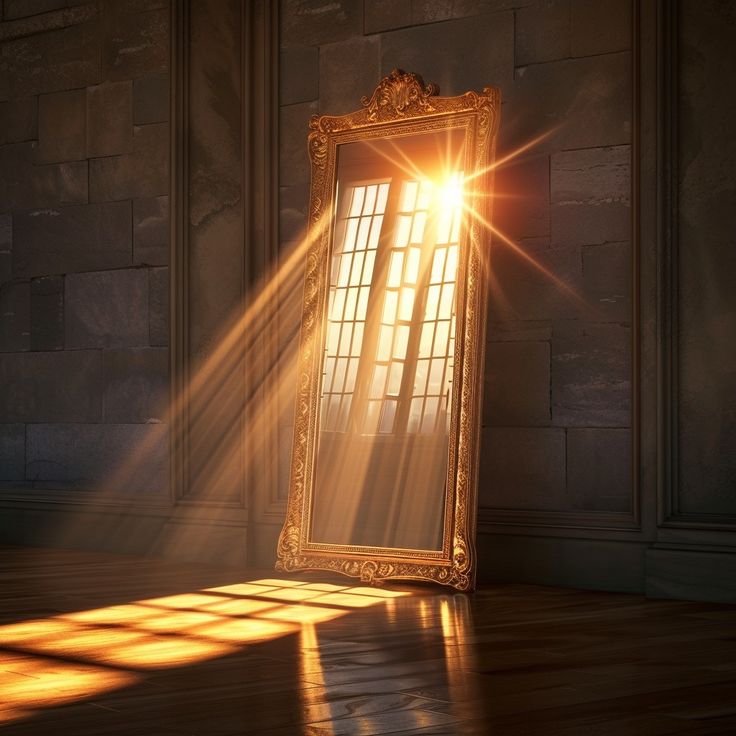
  • 8. A mirror that reflects the sun

    I am fool for thinking I can ever stop running. and they are a fool for waiting at the finish line. The mirror’s brilliance deceives both itself and others into believing that reflection equals illumination.

    Something I’ve thought about heavily recently is the concept of good and evil. What makes a person a good being and one a bad being. In philosophy, there are several ethical frameworks that outline what it is that makes a being good – for example, in virtue ethics states that a good person is one who develops virtues that strive towards moral excellence. In Utilitarianism a good person promotes the greatest happiness for the greatest number. In existentialist ethics, goodness in a person is found through creating value in our choices, living authentically and taking responsibility for the meanings, we create. And then we have the religious views of what it is to be a good person – someone who embodies love, compassion, humility and alignment with the divine or moral truth; being a good person often means transcending ego, acting selflessly and producing harmony with others.

    A view that has stuck with me the most, and the one I seem to question is the deontological ethic, Immanuel Kants Moral Philosophy. He states that the morality of an action depends on the intention behind it, not on the consequences it produces – for Kant, a person is good when they act from duty, meaning they do what is right because it is right, not because it brings pleasure, success or approval.

    “Nothing can possibly be conceived in the world… which can be called good without qualification, except a good will.” — Immanuel Kant, Groundwork of the Metaphysics of Morals (1785)

    A simple example of this would be telling the truth even though it can cause trouble, but you do it anyways because honesty is the right thing to do. Even if the result is unpleasant, your intention was moral, therefore making you morally good.

     But does having good intentions really make you a good person if those good intentions produce suffering in others? What if those good intentions seem good to the individual carrying them but doesn’t make sense to everyone else around them? Do you still remain a good person then?

    It is comforting to believe that good intentions make us good individuals, after all if someone means well, how can their actions be wrong. But I beg to differ and believe it is more complicated – good intentions can coexist with behaviour that causes real harm, whether it is physical harm or emotional and mental harm. A person’s motive may be pure, but when fear, ego or even emotional unavailability is present and blinding to the impact of their choices, perhaps that’s when their ‘goodness’ becomes questionable.

    I’ve been thinking about this from an avoidant perspective. As someone who has avoidant attachment tendencies woven deep into their soul being, I have questioned myself on several occasions whether or not I am in fact a good person.  See, avoidant attachment is not just about a relationship style – it is a lens through which the world is perceived, a filter through which we interpret love and connection. At its core it is a defence mechanism, an attempt to protect ourselves from the vulnerabilities of emotional closeness. It can begin early, often as an outcome response to early experiences that were too overwhelming, too unpredictable, or too painful. It is a learned behaviour – something picked up along the way, sometimes without even realizing it was picked up.

    When it comes to connection and love, whether platonic or romantic, it can feel like a heavy burden, an anchor that tugs too forcefully at the soul. And most cases this is where people think that we are people who are heartless, people who never cared to begin with, when that’s not the case – it is not that we don’t long for love, it is that we have internalized the belief that love demands something we can’t afford to give. We have learned to be hyper-independent, to guard emotions and to avoid leaning too heavily on others – so when this balance is disrupted, we instantly get pulled under and feel a sense of suffocation, of entrapment.

    Yet this need for emotional distance, this urge to protect ourselves from the vulnerability that love demands, often backfires. Because the very thing we push away is the thing that could possibly heal us, the very thing that can fill the emptiness we carry. We long for it, but we don’t know how to accept it without feeling overwhelmed, consumed or trapped.

    And here is where the paradox comes forward – we want connection, we yearn for the kind of love and connection that is deep and lasting, the kind that provides comfort safety and understanding. But the second it is within our reach; we push it away. We sabotage relationships with people, sometimes aware, sometimes unaware, we pull back when things get too close, when someone tries to love us in a way that feels too demanding, too dependent, too personal. We become distant and cold – retreating into ourselves to preserve the sense of autonomy and independence we’ve spent so long cultivating.

    Truth is, it’s not that we don’t feel love, or that we never loved a person: it is simply that we don’t know how to manage it. The emotions that come with love feel too big, too intense, too overwhelming that they don’t nearly fit into the walls we’ve built around ourselves. So, in return we detach before it implodes, we build walls higher and higher, each brick adding another layer of protection.

    Now back to the main point, as an avoidant, I tend to question if my ‘good intentions’ even make me a good person at all. Because even though I am aware of my avoidance, and that when it is triggered, I tend to push away not only for myself but because I know for a fact that the person involved will not receive what love asks from me. I am aware that because of my avoidant nature, I cannot give a person what they deserve, that is why I go into fight or flight and retreat. I used to tell myself that by detaching sooner rather than later, I am doing a good thing by protecting the other person from future heartbreak or from future withdrawals, but the more I’ve thought about it, the more I question if as an avoidant, even with right intentions, I can even be what is morally classed as a good person.

    Even though we care and truly love, avoidance often manifests as withdrawal, emotional distance or a refusal to connect deeply and the people who loves us most, become the ones who feel the brunt of this. To someone who just simply wants to love the avoidant, it can often feel like a punishment, a rejection.

    I will admit I have hurt people because of my avoidant nature; I’ve lost genuine relationships over distance and withdrawal all because I didn’t know how to sit with closeness. I’ve made people feel like they should apologise for their desire to be close, for just wanting to love me, when truth is, they should never have to apologise for such a thing – the work is mutual, they should be able to understand an avoidants fear, and the avoidants need to stop making those who love them the most pay for it.

    Love bombing can emerge from avoidant roots also, not in the same way as narcissistic abuse, but I will be honest I have had moments where I’ve also questioned if I’m really just a narcissist hiding behind an avoidant attachment style, not because it is the truth, I have been told professionally I am not, but simply because sometimes I feels like the damage I cause to others feels like the equivalent to what a narcissist would do. but love bombing for avoidants emerge as a panic response, sometimes we flood early intimacy with intensity, promises, poetic devotion – not because we are lying, but rather that in the moment, we want to truly believe we are safe. But as intimacy deepens, our nervous system gets flooded. The vulnerability becomes unbearable, so we vanish. Not because the connection and love weren’t real, but because it became too real, too quickly.

    This push-pull dynamic isn’t romantic nor healthy, for any form of relationship – it is destabilising, it erodes trust and if it is left unaware, it creates people to feel as though love should be earned, that safety is always temporary; that emotional warmth always comes with a cold front. The avoidants intention – to prevent harm – ironically becomes the very thing that causes it. In the good intention of trying to distance away in aim to create space for someone to get something better, something they truly deserve, we hurt them with suffering of neglect, lack of trust and betrayal – we make them feel punished for just simply trying to love.

    My avoidance, in most cases, proves to me how maybe I am not as much of a good person as I intend to be, even with my good intentions of attempting to prevent harm, I cause harm in other areas unintentionally – Hurt people hurt people, and I am a solid example of it. The way my mind decides to handle certain things in certain moments- it tends to forget that I’m not the only being on earth with feelings that need to be protected. Maybe I was doing the wrong things but with the right intentions, but even then, how is the person who falls victim to this supposed to know your intentions when your actions say otherwise.

    A person with good intentions but avoidant behaviour is like a mirror that reflects the sun yet never gives warmth. Their moral glow is only a reflection — an image of goodness rather than its living presence. They wish others well, speak kindly, and even recognize what is right, but their virtue remains inert – They mean well — they want to bring light, to be kind, to do no harm — but they stand always at a distance, untouched by the fire that gives life its warmth. True goodness demands more than right thinking; it asks for engagement, for the willingness to act even when it costs comfort or safety. The mirror’s brilliance deceives both itself and others into believing that reflection equals illumination. Yet genuine moral worth, like the sun’s light, lies not in the appearance of virtue but in the capacity to warm, to nurture, and to transform what it touches.

    Even though saying certain goodbyes doesn’t make me a bad person, I am not a good one either because I could’ve given kinder goodbyes, especially to those who were genuine. Even though letting go of certain relationships doesn’t make me a bad person, I am not a good person either because I allowed distance and silence to paint the conclusions that could’ve been made with communication. I am not a good person because I gave hope to people, promises I knew from the beginning I couldn’t keep – because in the desperate attempts of trying to heal and protect myself from this world, I fall and become the opposite of my ‘good intentions’. I don’t regret meeting people, I regret making them believe there is something to expect from me, when there isn’t. Maybe, within their hope for me, sparks a hope in me, and that’s what causes me to allow people in, even when I know the hard truth.  And the cost of it all is that we lose connections that could’ve still stayed if we had just sat a second longer rather than retreating, but most importantly, we emotionally damage people who didn’t deserve it.

    A lesson I learnt this year is that a person’s capacity for growth is directly linked to how much truth they can face about themselves without running away. As much as we try running away, I think the presence of self-awareness and our actions, independent from our internal intentions, is what brings out the truth, it makes you realise things you didn’t even think of within the moment, whether those things are good or bad.

    So perhaps, good intentions in fact does not make someone a good person, as goodness is not measured by internal motives alone, but by the effects of our actions also. But perhaps also, what defines a good person is the willingness to grow beyond intention, to face the discomfort of one’s own flaws, and to choose action that aligns care with accountability – that guilt we feel clarifies the want for change. It won’t undo anything that has already been done and set, as no amount of apologizing, no amount of remorse or regret can take back what’s already been set and let go of but – if there is guilt then there is awareness, and with that comes growth.

    – and with that I aim to do things differently, to become a good person.

  • 7. Traces Left In Clay

    “ a person is a person through other persons ” – Ubuntu philosophy

    During the moments where when I’m just casually walking the streets trying to get from a to b, when I am sat in a room silently filled with people are the moments where sonder hits the most. It is an obvious yet compelling concept to think about – of course every person on this earth has their own life, but to think deeper is to realise that every person faces complexities as vivid as yours.

    One person could be experiencing the best day of their life, maybe they won the lottery, while at the exact same moment, someone else is facing their worst, maybe they received a terminal diagnosis they never saw coming. One woman becomes a mother for the first time, while a few rooms down, another mourns the loss of her child – life is given to someone, while another loses it.

    You could speak to thousands of people in your lifetime, and none will share the exact same story. All those people you walk by on the street, you will never truly know what they carry. It’s beautiful in its own little way, how life is truly so vast that everything is happening all at once, and you don’t even know it – how everyone is shaped by things you’ll never witness.

    But what if sonder can also apply to those closest to us?

    We move through the world assuming we’ve mapped out the people closest to us. We know their coffee orders, their dating history, the last book they recommended – but these are surface level echoes, tidy exports of interior life – and interior life is rarely ever tidy. Our inquisitive nature is left often reserved for strangers and small talk.

    Truth is, we all contain secret cities, hidden interiors, rooms within rooms – these depths stay tucked away, because no one simply thought to ask, because life moves fast – because it’s rare to feel truly listened to.

    Funnily yet staringly enough, it’s often those closest to us that we stop being curious about. We fall into rhythms, into what we already know – hes the anxious one, she’s the advice giver, they’re the funny one – these roles we play so often we forget that they are merely just roles. Those closest to us become frozen in familiarity, their updates become unnoticed, and their edges dulled by memory. We stop noticing the slow tectonic shifts of their inner world. We relate to the last version of them we remember, not to the self still unfolding in real time

    Cognitive neuroscience has a name for this compressing tendency – it is called the “Theory of Mind” – our ability to infer what others are thinking or feeling. It is essential for empathy, but also means we’re constantly guessing, often lazily. We stop updating our internal models, we relate not to the person in front of us, but to their fossilized outline – we replace curiosity with prediction.

    But what if your closest friends still contain versions of themselves, you’ve never met? Versions of them that exist quietly, out of view, never for you to imagine – that gap between the person you thought you knew and the person besides you.

    What’s extraordinary is that our brain wants to model other people – it devotes much of its resting state to doing just that. The default mode network, the part of your brain that activates when you’re not focused on a task, spends so much of its time simulating other minds: rehearsing conversations, empathizing, reflecting, we are wired to think in relation.

    So, what happens when we take the shortcut of assumption? – we close off access to those rich simulations, and we lose touch with our own capacity for wonder.

    When we as humans come to the realisation of sonder, we are surprised by its vastness, not because the vastness has always been there, but because of how partial our perception had been, how much we flatten people into a convenient coherence, into a shortcut, because we are a species that likes shortcuts, that prefers something easy over something heavy – it is easier, after all, to compress people into neat narratives that fit inside our mental maps.

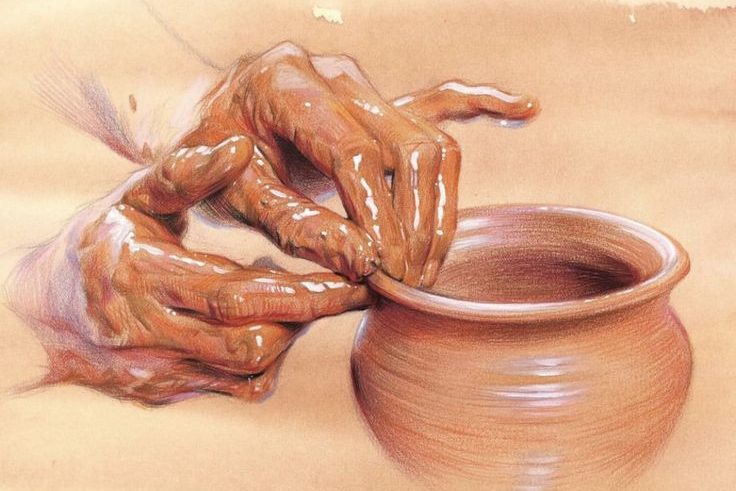
    But shortcuts don’t work when it comes to truly understanding someone. Clay doesn’t just shape itself into something – it needs the hands, the influence, the pressure, the guidance to take a form of something real, of something complex yet beautiful and meaningful. Without that, the clay stays the same – unshaped, unaware, stuck in a loop with no identity. You can’t skip steps when it comes to pottery, there are no shortcuts. People are like this too, shaped by factors and environments that we have no knowledge of no matter how much we think we do. What we assume may sometimes be half of the truth, but it is never the full truth.

    It’s never about lack of depth, everyone has depth, it’s about lack of invitation“if someone seems boring to you…it might be that you don’t know how to prompt them. You probably don’t know how much beauty lies hidden in the people around you” [Henrik Karlsson]. Actions speak louder than words, but words are actions, they land and rearrange. They build scaffolding for thought and memory – they reshape what becomes sayable, and in turn, what becomes thinkable. It is thew sole reason why a well- placed phrase can rewire your inner architecture, why a question can unlock a forgotten room, why a conversation can leave behind an invisible structure that you’ll forever keep returning to.

    When we really listen, we do more than just hear and begin to regulate. Our attention transforms into a co-therapist, a kind of social nervous system. This is called “Co-regulation” in polyvagal theory – it is the way our bodies attune to one another’s tone of voice, facial expression and breath. When someone listens gently with curiosity, your vagus nerve responds, your stress lowers and your capacity to think more freely expands.

    We don’t need to travel far to discover new worlds. Sometimes, they’re sitting across from us, sipping on the coffee order you’ve memorised, waiting to be seen again. Everybody in their lives is really waiting to for people to ask them questions – so then they can be truthful about who they are and how they became what they are,

    Ask the questions that linger, open and reveals. Listen for the answer, the pause before it, the subtle shift in posture, the breath they take before something brave. Because every interaction is a quiet invitation to be more alive with each other, to be mid-bloom together, to see, and be changed by the seeing.

    Vastness surrounds us, it is the sole reason for sonder, but it also surrounds us in the forms of those closest to us.

  • 6. The Pulse Of Persistence

    Life’s refusal to stop for our pain is not a punishment – It is the mechanism of our healing.

    An interaction I’ll always remember is when I had booked an uber. My driver was a man named Bekim, half Croatian, half Albanian, somewhere in his late 40s. He had more history to his name than one could imagine, a mouth that held a passion to express the chaos of politics; a heart which held tightly his culture and sole identity. He held a contained fatherly anger towards the world, as he spoke about his 8-year-old daughter and how her teachers didn’t bother to grasp the beauties and melodies of her rich name. He had transformed my hour journey to a few minutes. A few minutes that poured the presence of meeting someone who you needed to meet, to tell you what you needed to hear.

    As I sat quietly listening, he advised me to keep fighting- to never give up even if the entire world was against me. Alas we had reached my destination and the journey ended with him becoming a stranger once again, a stranger who changed my perspectives – a stranger whose name ill never be able to erase from my mind. One thing he said that I’ll never forget is – ‘you’re not allowed to worry about problems that have solutions.’

    Three years later, I’ve come to understand the sole meaning behind what he meant. As humans we tend to view inconveniences as a jarring concept, and in some cases, a catastrophe. How many times have we utterly lost it over small things, like our car breaking down, not getting immediate text replies, losing things, plans being ruined. We bleed energy that we don’t even have to begin with into things that was never ours to carry. These things aren’t unsolvable; they are just uncomfortable because we want perfection out of our lives instead of just rolling with the punches.

    Inconvenience isn’t a catastrophe, as annoying and uncomfortable it is to have a pebble in your shoe, they are not boulders in our path. They are things we can deal with and keep walking; it’s not something that completely stops us. If we fall apart over the little things in life, how are we, how are you, going to survive the big things that life unfortunately has to offer? How will you get through life, if you freak out every time your car breaks down, or you don’t receive a reply, or you don’t know where you placed your keys?

    And this is where I thought about the bigger problems. What about the bigger things, the things that drain us entirely. If we aren’t allowed to worry about the things that have solutions, then what about the things that feel like they don’t have solutions?

    And this is where Bekims words echoed once more – ‘keep fighting, never give up even if the entire world is against you’. Problems are inevitable, we can’t avoid them, but the more you stress about the little things, the more control life has over you – and when we do face the bigger problems, that’s when life completely consumes us with control.

    The first and hardest truth we have to accept is this: life doesn’t stop for anyone. Not for heartbreak, not for grief, not even for the moments that feel massive that it becomes excruciating.

    You could lose everything you thought you couldn’t live without – whether it is a person, a dream, a version of yourself that once felt secure – and yet, somewhere, not so far from where you stand breaking apart, a stranger will be falling in love for the very first time, a child will be laughing so hard they can barley breathe, a grocery store will be restocking its shelves with a quiet, ordinary insistence, as if the world hasn’t shifted at all.

    It feels cruel sometimes, the way life keeps moving forward, indifferent to whether you are able to move with it, the way hours and days and years continue to spill out across the floor of your life even when you have nothing left inside you to meet them.

    Maybe, deep down, a part of us expects, wants, the world to slow down out of respect for our losses. We believe, so heavily within our aching souls, that time should pause, that the noise and the rhythm of daily life should quiet itself long enough to catch your breath and get back up on your feet.

    But it doesn’t – and it won’t and never will.

    The sun continues to rise on the mornings that feel uninhabitable. The bills must continue to be paid on time, the strangers you pass on the street will continue to have their birthdays, their first kisses and last goodbyes- their lives will continue on, completely unaware that everything inside you have rearranged itself into something sharp and recognizable.

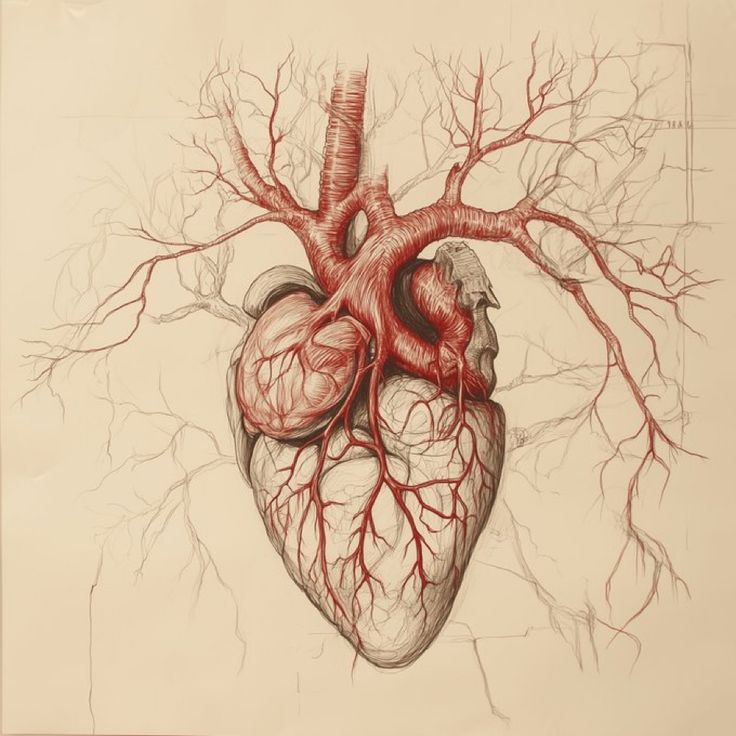
    There is no great cosmic stillness reserved for your sorrows, there is only life pulsing and continuing forward, as thoughtlessly as the steady flow of blood through our veins — constant, unrelenting, and purposeful. Even when we’re wounded, even when the heart aches or the mind feels overwhelmed, the blood doesn’t stop its course. It pulses forward, carrying oxygen to every cell, quietly doing its work, regardless of chaos or calm.

    And you, battered and broken, are somehow expected to keep moving too. You can try to hold still, to dig your heels into the soil of memory and refuse to be dragged forward, to replay the past again and again until the pain is transformed to feeling holy in familiarity.

    You can try to live there, inside everything that’s lost, convincing yourself that if you remain here long enough, life will notice your insistence and circle back to you.

    But it won’t.

    It will continue to slip past you, faster and faster – as will the entire days and weeks of your life that you don’t even realise are passing until you look back and see the blur, until you get asked ‘what day is it?’ and you are clueless. The longer you stay paralyzed in your pain, the harder it becomes to remember how to step back into the current without drowning.

    It is brutal thing to come to terms with and accept, yes, but it is also, somehow, a doorway. Because as much as it hurts to know that life does not stop for our sorrows, it is also the only reason any of us survive it.

    If time truly paused for every heartbreak, if the world truly honoured every loss by falling silent and still – we would never get unstuck, we would remain paralysed for eternity. We would never be able to leave the broken places behind us, we would never arrive to the mornings where the weight feels lighter and the laughter comes easier, where hope finally begins to stir again in our chests.

    Life’s refusal to stop for our pain is not a punishment – It is the mechanism of our healing.

    It doesn’t ask you to be ready, it doesn’t demand for you to be okay – it simply carries you forward, inch by inch, day by day, month by month – year by year. Until one day you wake up and come to realize you are not quite the same person who broke apart all those lifetimes ago. You are something new, unlikely something softer, but something stronger, wiser; someone who is shaped by their losses rather than defined by them.

    Resilience isn’t about waiting for life to stop throwing situations your way, life is consistent, it doesn’t stop for anyone. Resilience is about realising that problems don’t get to have ownership over you. You have survived 100% of your life up till now – every breakdown, every bill, every setback, every heartbreak, every inconvenience, every stressful moment – everything you convinced yourself you couldn’t survive, you have survived still. So, what makes you think this is the problem that is going to take you out?

    So yes, grieve, fall apart, feel everything – every jagged, searing impossible thing, because what you feel matters and deserve to be honoured. Mourn the version of your life that didn’t survive. Mourn the dreams you had to give up on. Mourn the people who are not coming back. But do not confuse mourning with living – do not build a permanent home in your grief.

    Because the truth simply is – the living is still continuing all around you, even when you cannot yet feel it pulsing under your skin. Just as our circulatory system adapts to injury, redirecting flow and healing from within, life, too, finds ways to keep moving. A setback isn’t a full stop; it’s a momentary clot, not a collapse. The body teaches us resilience — that motion continues, that healing is embedded in movement, and that stagnation is not our nature. We are built to endure, to adjust, and most importantly, to keep going.

    ‘Life goes on’ is not a dismissal of your pain, it is not a careless shrug at the things you have lost, and it is most definitely not a demand to hurry up and heal faster. We are humans, our sole purpose is to feel everything and anything. It is merely a promise that the story is not over, that you are not over. Life continues on because it carries you forward to become someone you have not yet met. And someday, maybe not today or anytime soon, you will meet that version of yourself who realizes you survived something that you had thought would destroy you.

    So, when the weight is heavy and your thoughts are complex- what do you do? How do you get over it when you feel as though there is nothing else to do, that there is no solution – what do you do? when you are hurt, broken and burnt out, what can you do?

    These are questions that are needed to ask oneself, because there will come and be moments where you will have to find out. You will be at the lowest point in your life, and everything will be against you – what will you dowhat CAN you do?

    Certain sufferings in our lives will leave when we have learned from them. But only when we have learned from them will they leave. We must take initiative to allow ourselves to try and find the messages in these sufferings, Of course, there will be times where it is going to be difficult, without a doubt. But other times you must find the writing on the wall; you have to be willing to look around and analyse what’s going on in order for you to possibly get away from the suffering that is surrounding you. Instead of expecting the world to pause, instead of living in this pain, you need to learn in order to keep out of suffering. That’s the solution to the problems that are excruciatingly big.

    Life goes on, and somehow

    So do we.