Category: Uncategorized

  • 5. When the campfire grows cold

    ‘what matters more to you – how far you’ll go, or how far others can go because of you?’

    One thing I will never understand is the life of a people pleaser. By far, it is the most alienated concept to me, maybe because I am someone who has far drifted from the motivation of wanting to fit in or being liked by everyone, maybe because I just simply am not open enough to please just anyone.

    But it intrigues and confuses me all at once, how an individual anchors their happiness to the happiness of others. That if the people around them were smiling, if they had felt cared for within their company then that is when they could breathe, as if they earned the right to exist. Usually when I talk about this topic, I come across as mean and heartless, which is understandable – I’m all for making others happy, but to the extent that your happiness relies on others, where your needs come second and that your value comes solely from meeting the needs of others, is where my perspective on people pleasing diverts.

    We’ve all been there, wanting to be kind, having a pure desire to make everyone feel seen, loved and safe, that is the sole beauty behind kindness. But when I take a step back and see the full picture, I can’t help but see it as self-righteousness masked with selflessness.

    What people pleasers crave is not just affection, but validation – they have this burning need to be wanted and a desperate want to be needed. And once they taste the flavours of approval, they can’t stop. It becomes an addiction that’s far more difficult to let go of than any drug.

    Meeting new people no longer becomes an aim for connection, as much as they say it is, it becomes an aim of how instantly they can satisfy them. I used to know someone back in college where any new person we interacted with they would agree with everything they said, they’d ask question after question as if their life was more important and interesting than their own – they were determined to be liked. And I’d watch how their identity would instantly be buried; they’d become someone I didn’t know in aims of being liked by someone they didn’t know.

    People pleasers collect affection like they are points, and the more they gather the more proof they had that they were allowed in this world. If the people around them were pleased with their presence, then their worth was justified – giving them evidence that they deserved to exist.

    The main thing that infuriates me when it comes to individuals with a people pleasing mindset, is how they take back people that did them wrong. Especially when it comes to the people that, the minute they stopped pleasing, those same people showed their true colours, they show how they never truly respected their boundaries, how they never truly valued their emotions – yet people pleasers always fall back and allow them back into their lives. That’s one thing they fail to come to realise – the people they are exhausting themselves out in trying to please, become the very same people who disrespect them. People pleasers fail to understand that kindness is not meant to be given out to just everyone and anyone. This doesn’t go to say don’t be kind, this goes to say that there are people out there that will take advantage of your kindness for their own benefit.

    Why that is, I’m not sure, but my best guess is the feeling of familiarity – they know this person, so they rather them back in than holding their ground and saying ‘no’. Maybe it’s a product of neglect from early years, maybe it’s the fear of abandonment, maybe it’s the power to have control in how people view and feel about them in order to feel safe. But these individuals are so far deep into being consistent with keeping others happy, that a simple ‘no’ automatically makes them a bad person – when that’s not the case at all.

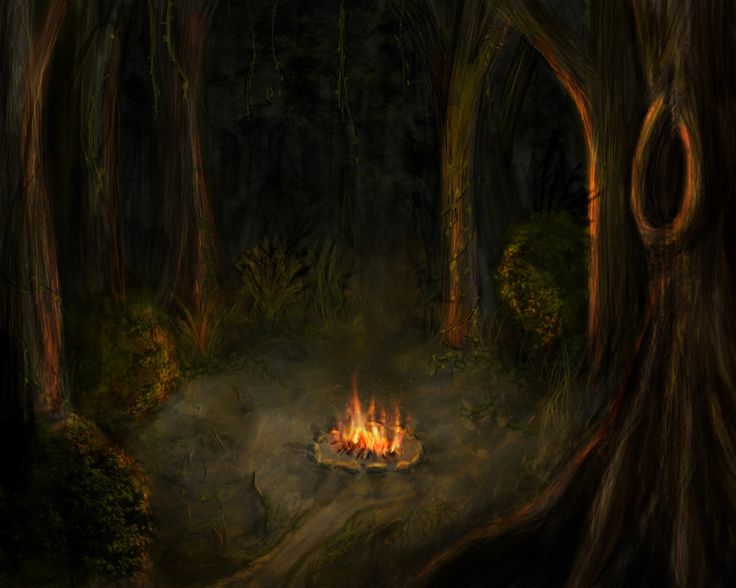
    They have this fire within them that is carefully built from their inner spark, offering warmth, light, and comfort. It spreads beyond its boundaries, reaching out to warm every corner, every shadow, every shivering figure nearby. It feeds on itself to meet every need, giving more than it has, never saying no to the next demand for heat. But they forget that even a flame must protect its core to survive, and without a spark a fire will cease to exist. They will burn themselves out for the sake of keeping other hands warm. And the funny thing about this is, they instantly blame themselves for not preserving the fire, for not continuously being able to keep others satisfied with warmth – but they never go to question why the hands they were keeping warm, didn’t offer anything in return, to keep it alive and to prevent it from ceasing. Why did no one kneel beside it with a log or even a handful of kindling? They circled close when the night was cold, held out their hands, basked in the glow—but when the flames began to flicker, when the light grew thin and the wood cracked low, they only stepped back and wondered what went wrong. Did they think the fire was endless? Did they believe warmth was its duty? Maybe they never saw the fire as something alive, something that needed tending too—only as a source, not a soul.

    So why is it then, do they not question the kind of people they are tirelessly trying to please.

    I see a major flaw in this system of living, because we live in a world of individuality, no matter how much you curate yourself, or how tirelessly you try to be agreeable or relatable – there will always be people who will dislike you anyways or people who take advantage. Why should you allow one disapproving glance, one unreturned smile to be enough to unravel your entire sense of worth?

    How long can you continue to throw yourself aside to please people – if someone you are trying to satisfy enjoys eating bell peppers and often cooks using them, knowing you have a dislike towards them, how many times will you have to fight back against a gag reflex before you admit that you don’t like bell peppers? – or will you just stop turning up to their house to avoid eating there and slowly start to let go of the relationship because it is less anxiety inducing than voicing your preference?.

    If anything, these individuals should take a lesson from the things they don’t like – think of the bell pepper, hypothetically – you hate it with a burning passion, not because of allergies or any explainable logic; it’s just pure, instinctive dislike. And yet, the bell pepper doesn’t try to convince you to like it, it doesn’t beg you to try it out or force you to enjoy its flavours. It simply just exists, knowing that there are countless others out there that enjoy it lovingly. What am I trying to get at here is that – you’re not for everyone, and that’s okay.

    The fact that some people will inevitably dislike you, no matter how well you perform, no matter how well you morph yourself into something just to satisfy their likes, will permit you to stop performing. Why exhaust yourself rehearsing for an audience that will never applaud, why twist yourself into a shape that will leave you unrecognisable in the mirror.

    To demand universal approval is both impossible and foolish, I understand that people pleasers have a heart as big as anything, and their souls are just filled to the brim with kindness, but as beautiful as that is in theory – it is destructive in practise. Perhaps what you need isn’t for the world to love you, but for you to love yourself.

    Here is a hard truth not many like to hear, but people pleasing can turn you manipulative – you lie to yourself, and you lie to others by going against your own thoughts and preferences, you become someone who lacks a voice of their own, and a duplicate of someone else. You bury everything that makes you, you, just for the sake of validation – your life no longer becomes yours, but it becomes the possession of those you please.

    Life has an unforgiving way of placing humans through experiences that produce heartbreaks and pain, making us very much aware that people come and go – but most importantly, it makes us aware that the only true companion, the only constant one we have and ever will have is ourselves. And so, perhaps the real work of living this life shouldn’t be to please the crowd, but to stand, on your own two feet, as a whole.

    You’re not for everyone; you will never be. Your flaws, your charm, your humour, your goals and talents, your desires, your shames, your ideas and beliefs – they are yours, and yours alone. If you fear your true self, fear your thoughts and opinions to be disliked, then the fault isn’t in you, the fault is in who you are choosing to surround yourself with – you should fear those people rather than the person that you are.

    The day you finally stop begging to fit into everyone’s world is the day you start building your own. Not everyone will like you – and that’s exactly how it should be.
  • 4. The Fig Tree

    I want to be an encyclopaedia of lives and ideas – I want to know everything about everything.

    I will be turning 21 four weeks from now, and as the number of my life increases, I can’t help but feel smaller each year. Like I haven’t moved and just stayed in the same spot as I was in last year. I wouldn’t call it lazy; I’d describe it as a paralysis.

    Every now and then I catch myself looking at the profiles of people I used to attend high school with, just out of curiosity to see where they are in life – many of them have gone out to see the world, some in relationships with their high school sweethearts, some have expanded on their experiences for their life careers. I can’t help but feel this overwhelming paralysis in the face of expectation, like by now I should’ve become something, meant to have aimed, achieved and succeeded – like my story should be half filled with chapters to tell.

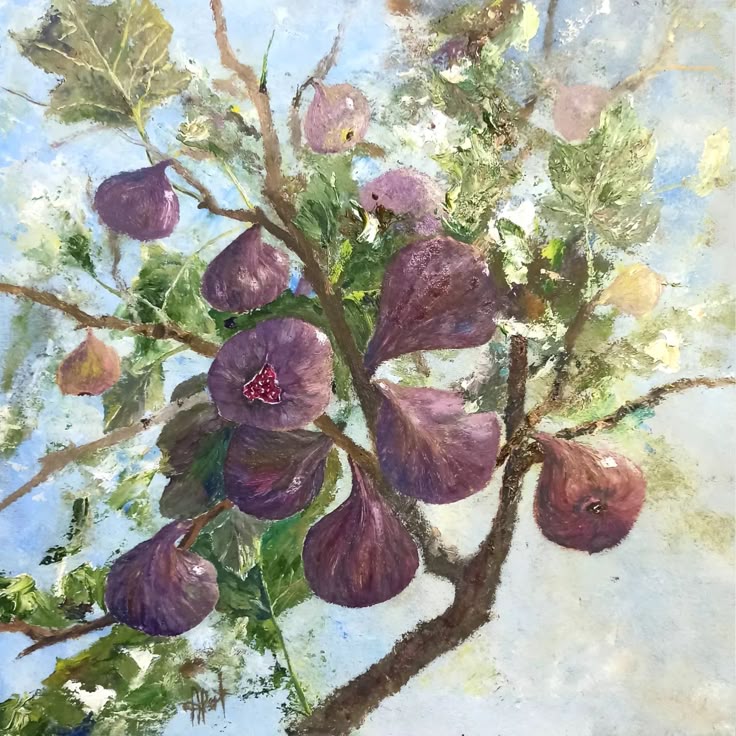
    ‘I saw my life branching out before me like the green fig tree in the story. From the tip of every branch, like a fat purple fig, a wonderful future beckoned and winked. One fig was a husband and a happy home and children, and another fig was a famous poet and another fig was a brilliant professor, and another fig was Ee Gee, the amazing editor, and another fig was Europe and Africa and South America, and another fig was Constantin and Socrates and Attila and a pack of other lovers with queer names and offbeat professions, and another fig was an Olympic lady crew champion, and beyond and above these figs were many more figs I couldn’t quite make out.

     I saw myself sitting in the crotch of this fig tree, starving to death, just because I couldn’t make up my mind which of the figs I would choose. I wanted each one of them, but choosing one meant losing all the rest, and, as I sat there, unable to decide, the figs began to wrinkle and go black, and, one by one, they plopped to the ground at my feet.’

    So here I am not knowing what I want to do with my life, not because I have few passions or because I am unsure of what I want, but because I possess many of them, I am haunted by the want to be every version of myself, I want to be an encyclopaedia of lives and ideas, I want to know everything about everything – yet I know I can’t taste every fig and I hate the idea that choosing one life means grieving the others. Each fig is an overflowing fountain I’ve only dipped my toes into and so the idea of time consumes me because what if I never have the chance to bathe in each pool. I want to be great, but in a generation like ours, being great isn’t enough.

    I can never read all the books I want, I can never be all the people I want and live all the lives I want, I can never train myself in all the skills I want – and why exactly is it that I want?, I want because I want to live and feel all the shades, tones and variants of mental and physical experiences possible in my life but I am horribly limited. It is exhausting to want so much yet when you stand in front of your life, all you see is fragments, a trail of unfinished attempts – the worst part of it all is that I still continue to want to be everything.

    Fearing of deciding isn’t about failing at trying everything, the scariest part is that I’ll fail at everything, that I’ll come to the end of this life and go out with the realisation that I was never good at anything.

    Maybe that’s what it is – that even though you don’t have to be good at something to have a meaningful life and joy can exist in mediocrity, deep within me all I want is to be remembered for something, to be more than just fragments.

    Maybe I just want the feeling of being good at something, the relief of knowing I belong somewhere, the validation that I am not just passing through life without leaving a trace – and I guess that’s where the satisfaction that comes in,  from thinking of yourself in different possibilities, feeding on the illusion and greed of having multiple lives and experience different successes whilst the one life you do have is passing by without you pursuing a singular fig.

    Theres a contradiction that arises from wanting, it’s a mess between doubt and commitment, because to want is to commit. I want to be everything, but I don’t want to spend the time it takes to be one thing, I want to master a craft, like play the violin, but I want to taste all the other arts too, I want to be special, but I don’t want to endure the ordinary years it takes to become so. Time is a terrifying thing, and committing to something means the ticking will commence on whether you succeed.

    As I sit at the crotch of this fig tree, starving myself to death because I just can’t make up my mind on which fig to choose which one to taste and savour, I come to terms that it isn’t about choice at all, but rather about doubt. It is doubt that paralyses my body when I stand before this tree of life, it’s not only an inconvenience, but it is also grief – doubt of not enjoying the richness of the one fig I finally choose as I expected I would, and grieving all the other figs I could’ve devoured instead. Grieving the time I had lost or the potential I could’ve had.

    As I lay here under the branches, eyes tracing each fig like a possibility, like a life that could be. The perfect figs, untouched goals still within reach. The bruised figs, mistakes maybe worth making and the rotten figs—those struck something deeper as they are the what ifs left too long., the dreams that deferred until decay. And then it hit me like a sharp breath: waiting doesn’t preserve anything—it only delays the rot.

    What if I am not the person who is choosing the figs – but rather I am the tree itself growing them. Choices are always fleeting, what makes us human and sustains us through life are our roots, and our ability to whether change. The fig tree roots runs deep and blooms in seasons. The tree itself doesn’t worry when a fig falls and rots, because it knows it will bare new ones. Doors are opening and closing all the time, just like how a fig tree loses figs and grows new ones.

    It has taken me an embarrassingly long time to also come to the acceptance that not every fig needs to be picked – sometimes you’ll see its leaves accompanied by ripe figs, would you go to pick at its branches knowing that its sweetness has not yet prospered, that its bitter taste will displease your honeyed cravings? – realistically no, so why rush into picking it when you know your present self is still yet to bloom. And simply put, not every life path is meant to be walked by you, some figs may have to be sacrificed for another fig – by this I don’t mean giving up what you want, I mean the things that aren’t essential, the things that don’t carve out the essence of your desires but the things people ‘ expect from you’. You are the tree, you are who grows these opportunities, and they are for no one to pick from but yourself.

    Now at almost 21, My paralysis slowly begins to release me, I feel my leg twitch, allowing me to move forward and then my arm, allowing me to reach – I am the one who is nurturing these choices and growing them, yes, I am trying to choose, but at the same time – it is still all me. Because if I couldn’t bare all these figs, then I wouldn’t have the desire to want them all. The worst part isn’t picking the wrong fig, it is the time passing as we sit and be indecisive, it’s watching potential rot right in front of you, not because it wasn’t yours, but because you were too afraid to reach out.

    Another take is that just because a fig falls, doesn’t mean it instantly shrivels up, it begins to rot with time and abandonment. Time is not unlimited, but that doesn’t mean we must have a deadline for when we need to achieve, why not collect all the figs  in a basket, have a little taste of each one, make a jam out of the rest so on some mornings you can return to it, to spread on a piece of bread.

    Because truth is, us as humans are never fulfilled, we will always crave more with every fibre within our bodies, so deciding on one thing is more so suffocating rather than liberating – something within us wants more, we can’t just simply rest.  They key is to keep moving, to never stay still – don’t allow making a singular decision paralyse your body. Why settle for one, when you can explore many things, this life has to offer, for we are not managed by time, we are the ones who manage time.

  • 3. Truce Over Coffee

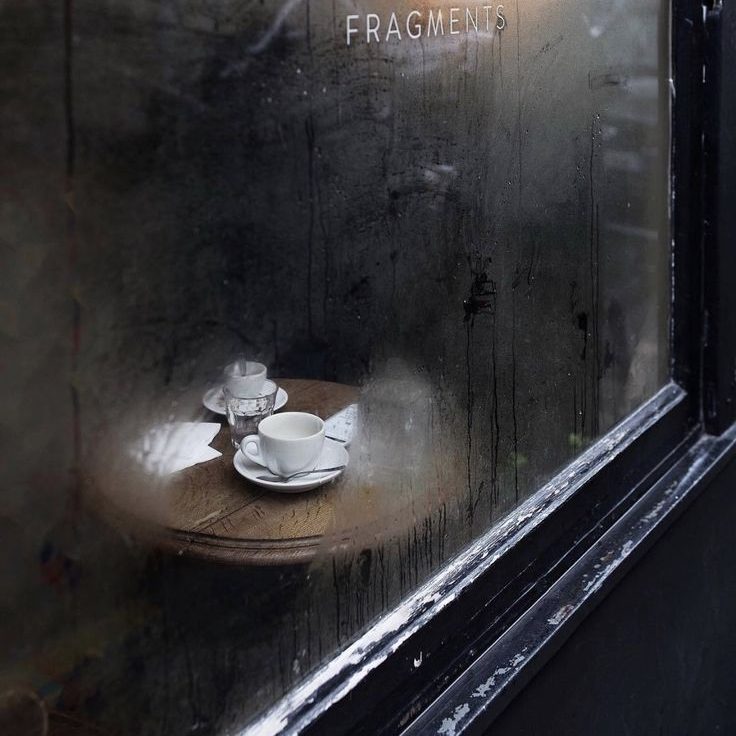
    ‘ between them, the coffee cooled like a truce neither wanted to end.’

    They say the heart wants what it wants – but they often tend to leave out how quickly it truly wants something. Long before the mind has had time to analyse, question, or rationalize all the potential ‘ifs’ and ‘buts’, the heart has already made its move. It leaps, it aches, it decides – without any second thought, without the mind. And often, we only realise the weight of that decision once our mind finally catches up.

    Love, hope, fear and pain – these are not things we as beings intellectually process first. They arrive unannounced, stirring something deep within us. We feel the pull of someone new, the string of a goodbye, or the thrill of possibility; in that moment – no amount of reasoning can restrain what we feel. We act, speak, or fall in ways that logic cannot always justify.

    Some may say the heart is reckless, some say its honest – as it doesn’t wait for a perfect plan or a guaranteed outcome. It operates in truth, in instinct, in raw emotion. That’s its beauty – but also its own burning danger. It’s what pushes us to take the risks and open up, even when our minds are screaming warning signs.

    But of course, the head eventually catches up, and with a heavy breath finally steps in. It runs the numbers, weighs the consequences and scolds the heart for being too eager. But majority of the time, the mind is too late, and the heart has already changed the course of everythingand what’s done in the name of feeling, can’t always be undone by reason.

    This change of course is what most fear – it’s what I feared, it’s what has come true, and it’s what I continue to fear this very day. Although allowing yourself to feel every ounce of emotion is a natural thing, a beautiful one at that, the fear of the aftermath, of the possible destruction it may cause, is what has placed my heart into lockdown and my mind onto a pedestal – some may even view my mind as a tyrant for how much power it holds over my heart. Because even though it’s what keeps me safe, when my heart is offered something pure, something it yearns, no matter what – my mind will always say no and my heart will just accept in silence, no matter how much it aches.

    I guess some may argue that with destruction there can arrive peace also, but something within me has altered to not want to go through destruction for the sake of a possibility of peace. I’d rather sit still and wait for it to arrive when its time for it to, so I can feel all its glory in one piece, rather than go through the possible hell just for a possible peace to arrive – yes it arrives, but what at cost?

    It is as if after the last leap the heart took, the heart and mind sat across from each other in a quiet café, both nursing to their scars, two coffee mugs between them with steam curling upward and fading into the still air. They sat in a weary discussion, the mind pointing out how the heart always leapt like a flame towards any slight flicker, leaving the brain behind to gather the ashes. And for once the heart decided to listen, not to defend or argue – but to understand, as it stared down into the coffee, stirring without drinking, the mind, measured and calm, laid out its reasoning like a blueprint, showing how logic could protect them both from the wreckage of impulse. Silence stretched between them, the heart finally began to see the wisdom in restraint, in thinking before feeling too deeply. As the air filled with the heavy weight of lessons the heart had always been too eager to learn, the heart nodded in a quiet understanding, reaching for the coffee in a rare moment of stillness – the mind let out a bittersweet sigh, a mix of relief for the weight lifted but also resignation because it had noticed between them, the coffee had grown cold, as if it was symbolism for it being too late, or perhaps it grew cold like a truce neither wanted to end, but it was a quiet reminder that even peace takes time and with that – neither one took a sip and left behind their truce to steep in a cup, forever to remain untouched.

    I sometimes wonder if the reason for why I can’t seem to maintain relationships or friendships well, or for why I view things so harshly and raw is because of the decision of allowing my mind to be in control. As some people balance the heart and mind, only allowing one or the other out when it’s called for, I chose to only allow my mind to have the privilege to that freedom of stepping out in the open, I don’t really have a clear understanding as to why – all I know is that I fear the past from reoccurring, or that I fear others being hurt from my own actions – but that’s the funny thing, in the process of allowing my mind to take control with the aims of protecting myself and others, I end up hurting myself and others anyways – I wonder if my heart finds it comedic or is at utter distraught at the fact the sole reason its caged up is so it doesn’t have to be faced with pain, yet it is happening anyways, only difference is the pain I face isn’t something I feel or show emotionally, I feel it mentally – it shows in the way I think, in the way I write, in the way I perceive – you wont see me crying but you’ll see me view or word something a certain way, not because I’m hard headed, but because I’m emotionally incapable to allow myself to feel, at least out in the open anyways,  so I express my emotion via my thoughts, my words.

    It’s sort of sadistic to say, but I prefer it this way, it offers me a reassurance knowing that my mind wont have to run after my heart and scold it and yell ‘ I told you so’ – I prefer my mind making me aware and alert from the beginning ; not having to have my heart ignore it and continue, to then later return back being hurt – I prefer my mind expecting to be disappointed before anything has even happened rather than waiting for it to come out of nowhere, unprepared. Unfortunately, the price I must pay for this is that I appear unaffected by things that should clearly have an effect, which they do, I just don’t allow myself to physically and emotionally show it – only mentally – my mind just transforms emotions into intellect, my mind is the tyrant remember. But people don’t get that, they see it as cold hearted, someone who doesn’t care – but I don’t blame them when they view me like this, when you become someone who is surviving rather than living, someone who doesn’t allow their heart that sort of freedom, it’s expected to be viewed as heartless.

    However, as much as I find those who set their hearts out to be free to make every decision as foolish, I will admit, there will always be a silent admiration for those individuals. Because there is something profoundly human about this imbalance. It’s what allows us to love people we shouldn’t, chase dreams that seem out of reach and hold onto hope in hopeless moments, The heart may not always be right, but it’s often what makes life worth living.

    Acting from the heart can lead to heartbreak, disappointment, or regret – but it also leads to our most meaningful experiences – the moments we remember long after logic has faded. Those impulsive choices, those emotional leaps, they shape who we become.

    As often as I value control and caution, I do believe there’s courage in being led by feeling. Theres quiet a bravery in trusting your heart to guide you, even when the path is unclear, my heart, under its chains and locks, envies yet yearns for this kind of bravery – because while the mind might keep you safe, the heart is what keeps you alive, and sometimes I do question if me shutting off my heart emotionally is the sole answer to all my ‘whys’ – if the past made me shut off my heart, then maybe I am the way I am because of that reason too.

    Maybe the mind is there not to restrain the heart, but to help it find its way home – when will I allow that to happen? I don’t know. Instead I never go near a cup of coffee again.

  • 2. In Solitude

    To embrace solitude is to embrace self discovery, Run into aloneness with open arms and let it swallow you up – sit with silence and let it teach you what cannot be learned elsewhere. There’s liberation here.

    Humans are deeply social species, during evolutionary times we relied on being in groups to hunt, to protect and to survive. Through time, the human body evolved mechanisms to reward social closeness – releasing oxytocin, what we know as the ‘love hormone’, and dopamine when interacting with pleasurable social interactions, almost making it an addiction to the mind and body to encourage us to seek connection again and again.  

    Maslow’s hierarchy of needs state that connection and belonging, whether from friendships, intimacy or family, sits in the middle of Maslow’s pyramid, right after basic physiological and safety needs – and that without satisfying this level, it’s deemed as difficult to progress to higher levels like self –esteem and self-actualization. The self-determination theory states that as humans we have three innate psychological needs: 

    (1)Autonomy – control over our actions

    (2)Competence – feeling effective 

        (3) Relatedness – feeling connected to others. 

          Relatedness being the most essential for our mental health, claiming that without it we become isolated – as the self-identify theory states, belonging to a group helps form a stable sense of self and identity.  

          But what if I was to oppose these theories, what if I was to say that we don’t need to satisfy connection and belonging to progress to self-esteem – that relatedness can lead to the possibility of lacking autonomy – what if we become isolated from trying to relate and belong somewhere we don’t fit in – what if the reach for belonging leads us to instability and lose of self? 

          In today’s world, people have become thirstier for this addiction, the addiction of belonging, they’ve grown to fear to be lonely – to be alone. Humans have grown to take silence as rejection, they have adapted this instinct to not be alone or perceived as lonely at all costs, to avoid that ‘hollow’ feeling of being unwanted, unchosen or unseen – even to the extent that the thing they fear the most is being demonstrated by the people they surround themselves by all in the aims of ‘not being alone’. 

          One of my biggest fears used to be being alone, this stemmed from high school, where everyone was in groups and anyone who was seen on their own was perceived as an outcast, a loner. I remember people wouldn’t even go to the bathroom alone simply because of the fear of being perceived as someone who didn’t have friends. But, with the more observant I became, I came to the realisation that many of us surround ourselves with people, desperately trying to find a place of belonging just for the sake of not having to feel the effects of loneliness, that we were blinded by the type of people we were surrounding ourselves by – that the places we were seeking company in, were in fact somewhere we would never truly be ourselves in – I say this because constantly trying to belong somewhere becomes extremely exhausting ; if you belong somewhere, you will naturally fit into place, you wouldn’t need to exhaust yourself out to achieve a sense of belonging.  

          I feel as though people fear being alone because of two main reasons – they haven’t seen permeance therefore producing a dependence on others, or they haven’t learnt to experience their own silence. Both cases will lead a person to misinterpret and believe being alone for being lonely.  

          Of course, being lonely is a natural feeling we all ,as humans, will experience, as it is what drives us to want to have connections – but being able to be alone and being comfortable with your own silence allows us to detach from a route that leads to dependency on others, we should be able to have a drive for connection without that connection being the very thing that drives us to loss of self. 

          This doesn’t go to say that we shouldn’t seek connections, and all bonds are damaging –there are many connections I have made that have changed my life and my perspectives for the better. We can have connections, we can have relationships and find a comfort within them, but we should try, before anything, to find that comfort within ourselves – because as much as you desperately scavage around to belong somewhere, to someone, when the day comes – you will be entering your own grave alone.  So why fear being alone, when that is where our fate will end, why fear it when we can embrace it in ways where we can strive even if there was no one following behind. 

          I strive best in solitude, in being alone, because for a while now I’ve come to understand that you will never be yourself the way you can be in your own presence, in your own silence. In solitude, there is an acceptance offered by the silence – an acceptance that will never match to one given by human connection – because logically, humans are designed to make mistakes, we are made to disappoint – and when you survive life with the mindset of expecting disappointment no matter who or what, solitude becomes your friend.  Being alone, everything and anything is within your control, there is no influence, no disturbance to what you do.  

           Constantly being surrounded by people means you are constantly trying to fit in, no matter how much you decline this, it utterly means you will constantly be trying to fit in, whether its people you just met or people you’ve known for years, trying to fit in will always be there, consciously or unconsciously – it’s in the form of being relatable, it’s in the form of trying to be funny and in the form of trying to be relevant. My solitude has made me lack horrifically in group settings or in any setting that involves socialising– I am not a social butterfly; I tend to stay quiet and just listen – simply because my desire to fit in doesn’t exist. I’ve found my selective few of people where I feel comfortable with and no longer carry an interest to fit in elsewhere – and this comes from being okay with being alone, because if you no longer seek to fit in, you will see the places you naturally belong and the places you don’t, it no longer becomes a game of aggressively trying to force a puzzle piece into a place where it doesn’t belong, because the more you try forcing this piece to fit, the more damage it will have – ultimately disfiguring its original state and preventing it from fitting in the place where it truly belonged.   

          You don’t have to be liked by everyone; you don’t have to be seen as good or the best to everyone – these things aren’t what brings value you to you, value isn’t earnt via other people and what they think – value is non transactional – you make your own value, and constantly needing to be around people will place you in situations where you are surrounded by the wrong people – those who make your value a matter of transaction. 

          Learning to be comfortable in being alone will allow you to form your own value, a kind that will be unshackled, undisturbed, no matter who you interact with.  Sometimes, it’s not even the company alone that people crave, but it’s the validation that comes with having company – the recognition that we exist, but this all roots back to you, in how you value yourself or even see yourself, without knowing what it’s like to be alone, you’ll never understand yourself truly, hence why so many people fear being alone – they fear never being understood. 

          My solitude tends to be frowned upon by most, by those who can’t understand the importance of being comfortable in your own silence, your own time and your own presence. As much as it can be perceived as a blessing and a curse embodied in one, I will always view it as freedom – because my form of freedom isn’t happiness, something that is temporary – as all things that rise can also fall – my form of freedom is peace, and if it takes being alone to be at peace, then I’d never look back. Because within these walls of peace, I can grow to understand myself without overexplaining relentlessly trying to be understood, without having to make sense of the ‘whys’ to those who were never meant to understand to begin with – if i can make sense of the whys, or at least try to, to myself – why would I need to make sense of it to others? 

          Making sense of something to someone whose never experienced walking in your shoes is like trying to describe colour to someone whose only ever seen in black and white.  

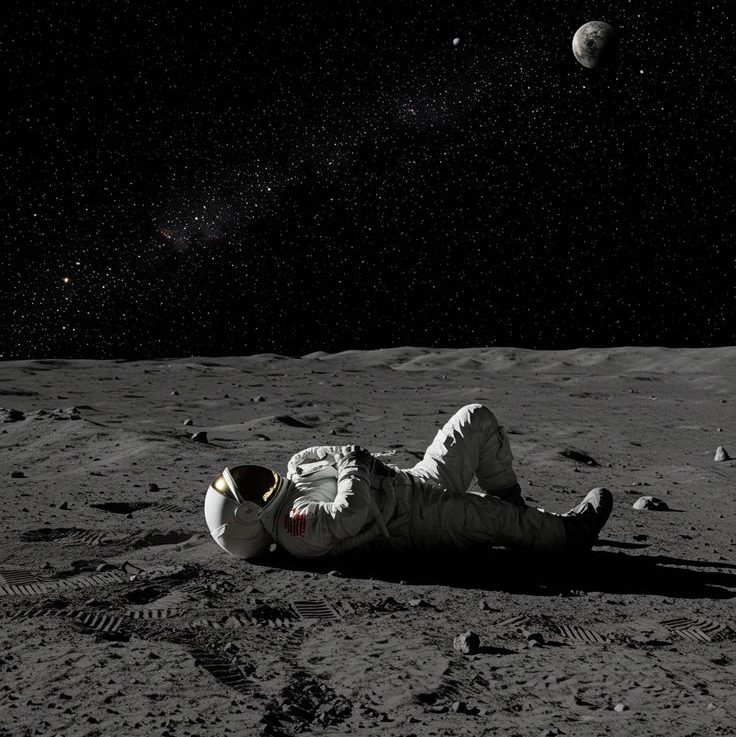
          I tend to think of solitude as an astronaut drifting alone through the vastness of space – not lost but finally free from gravity, up there in great stillness they are utterly alone but not lonely. There is no noise but the rhythm of their own breath, no chaos but the quietness of their own thoughts. Each orbit around a distant world is reflection, and each sunrise he witnesses is a reminder that peace can exist without presence. The astronaut isn’t isolated – they are in communion with the universe. In solitude they don’t vanish, they expand – becoming small enough to be humble yet vast enough to feel infinite.

          So, when solitude is frowned upon, my mind will always go to the astronaut, how they chose to leave earth behind, not out of exile but out of calling, knowing that space will drift them far beyond the crowds, that communication will grow thin – they still choose to go. Because without accepting being alone, the astronaut would’ve never seen the beauties beyond our world, they would’ve never experienced the kind of silence that is comforting rather than deafening.  

          Solitude is what allows time to feel different – slower, gentler – it’s what allows my thoughts to stretch without interruption. Being okay with being alone allows you to notice things you would’ve never noticed in noise, it allows you to experience what peace sounds like when no one else is speaking – as selfish as it sounds – but for you to grow, for you to develop your character into something you want it to become, you have to learn to be okay with your own presence – because once you do, no one can influence who or what you become, that power is left to you to consume.  

          Become that astronaut who looks out at earth – seeing how small and far it truly is – coming to the realisation of how much you carry inside, whether a weight or a potential, that no one ever sees, and in that very moment solitude is no longer a fear, an emptiness – its expanse. A place where you rediscover your own voice. 

        1. 1. The Ocean

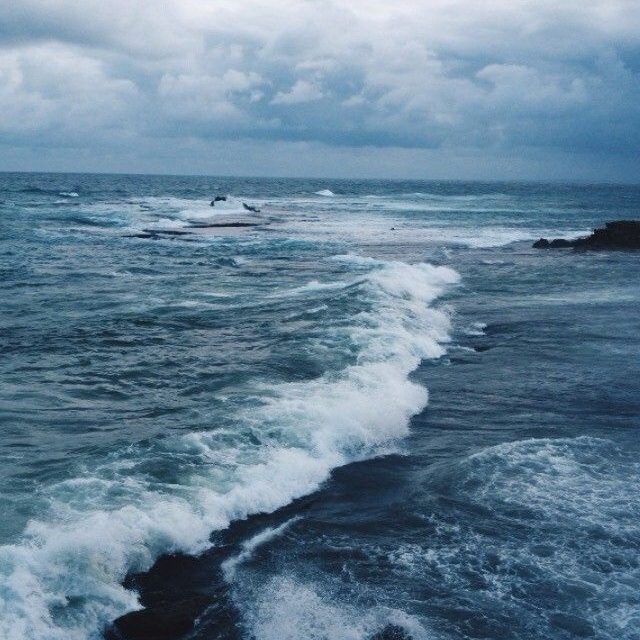
          we don’t drown because we swim against the water current, we drown because we swim against ourselves – As too much movement and chaos against a wave in the
          ocean doesn’t help keep a body afloat.

          Death can either be the last thing to cross a persons mind or the very thing that can utterly consume a being – how will I die? when will it be? will I be ready?. If you asked my younger self, she’d be terrified as she viewed death with fear, a fear that would strip away at her hopes and dreams that were driven by passion and purpose – as to die meant there was no happy ending. She believed that there was still so many colours to discover to paint across the canvas of her life as back then death felt distant, a shadowed corner somewhere she would never have to go to.

          If you were to ask me now, my answer would be –

          ‘ I’d love to drown.’

          As unsettling and tragic that sounds, to me it sounds like peace and freedom. There’s anonymity connected to the ocean, no one knows how deep it goes, no one knows how far, it brings a form of silence that can never be recreated.

          There’s something about surrendering to the currents that makes me believe in release, in letting go to discover something deeper – as if the water can carry away all the weight a person has carried for so long, In the arms of the ocean, I cant help but imagining that ill feel lighter than I ever have on land. Allowing the water to embrace you as it holds you back at first from ending the life that you’ve fought hard to keep, until finally it doesn’t hold back anymore and begins to take you wherever it wishes to, I tend to wonder if in the very moment ,where my body relaxes and allows the water to win over my body, is the moment I will find the peace i have been desperately chasing for – I wonder if the only reason the ocean possesses that calming presence that you cant find elsewhere is because it is the only thing that knows of a freedom I’ve never been able to give myself.

          It’s weird, right? reading about a person fantasying over their own death, over something that hasn’t even come, something that should be feared rather than fantasised upon – but why is that the case? why is death something to be feared if it is something that brings peace, something that silences chaos. I’ve come to an acceptance that death isn’t so much an end as it is a doorway into the unknown – and perhaps that makes me more curious than afraid. Sometimes I wonder if the real tragedy in human existence isn’t in fact death, but rather never finding a place where you feel at home, at peace – somewhere for your soul to rest. Perhaps the ocean is where id want to be my last place, because it is where I feel most at peace, the ocean is what reminds me that life is both vast and deep, that I have an existence of something far larger than myself.

          Sitting by an ocean and watching the waves roll in has become a habit, a way to forget everything and just breathe. Something about the waves leaving the shore and always returning back provides a calmness in me – almost as if its a form of reassurance, that even though the water that calms me may fall back, it will always return.

          But of course, just because you love the ocean, doesn’t mean you have to drown in it. I’ve thought to myself, maybe I want to drown in the ocean because of how much I love it, because of how much peace it brings me, that drowning in it is the only way that i can stay at peace forever – but through time you come to realise and learn that you don’t need to stay forever to belong – because the quiet truth is that permanence is not a prerequisite for meaning. I think that’s why so many people fear death, they fear not leaving something behind, not making something out of their existence. But thats the funny thing right, compared to an ocean, we are merely nothing – so why should we be so focused on permeance and not presence? People may forget how long you were around — but they remember how you were present: how you made them feel, what you brought into their lives, and what you left behind.

          When it comes to dying, it isn’t death itself that calls, its the thought of finally being free, free from pressure, free from the weight that makes every day feel harder than the last – death may look like comfort in the moment, but the real comfort is found in healing, in small changes – in learning how to carry the weight differently instead of allowing drowning to release it for you.

          If humans wanted to drown, if they truly wanted to die in the ocean, why is it they fight the water before they allow it to take control over their bodies? is it fight or flight or is it truly them realising that they don’t want to die ; because when death finally rears its head, you feel a sinking feeling at the base of your stomach, why, when death finally shows up at your doorstep,
          you are afraid to hold out your hand, to allow it inside –
          that you become filled from your feet to your crown with
          so much terror, so much frightfulness –
          that your whole body begins to tremble.
          Why are you then, so afraid to look death in the eye,
          why does your gaze waver?


          You weren’t surprised at deaths arrival,
          You always knew death was going to show up at some
          point –
          But rather,
          You were surprised that now, of all times,
          You suddenly have an overwhelming urge to live

          because death is not what calls you, what calls you is freedom. Afterall, the ocean is not meant to keep you, it’s meant to remind you on how to let go – for it isn’t the water that drowns us, its ourselves, and in the moments where we are stranded in the middle of an ocean with hectic waves – too much movement and chaos against a wave doesn’t help keep a body afloat, its what causes it to drown.